
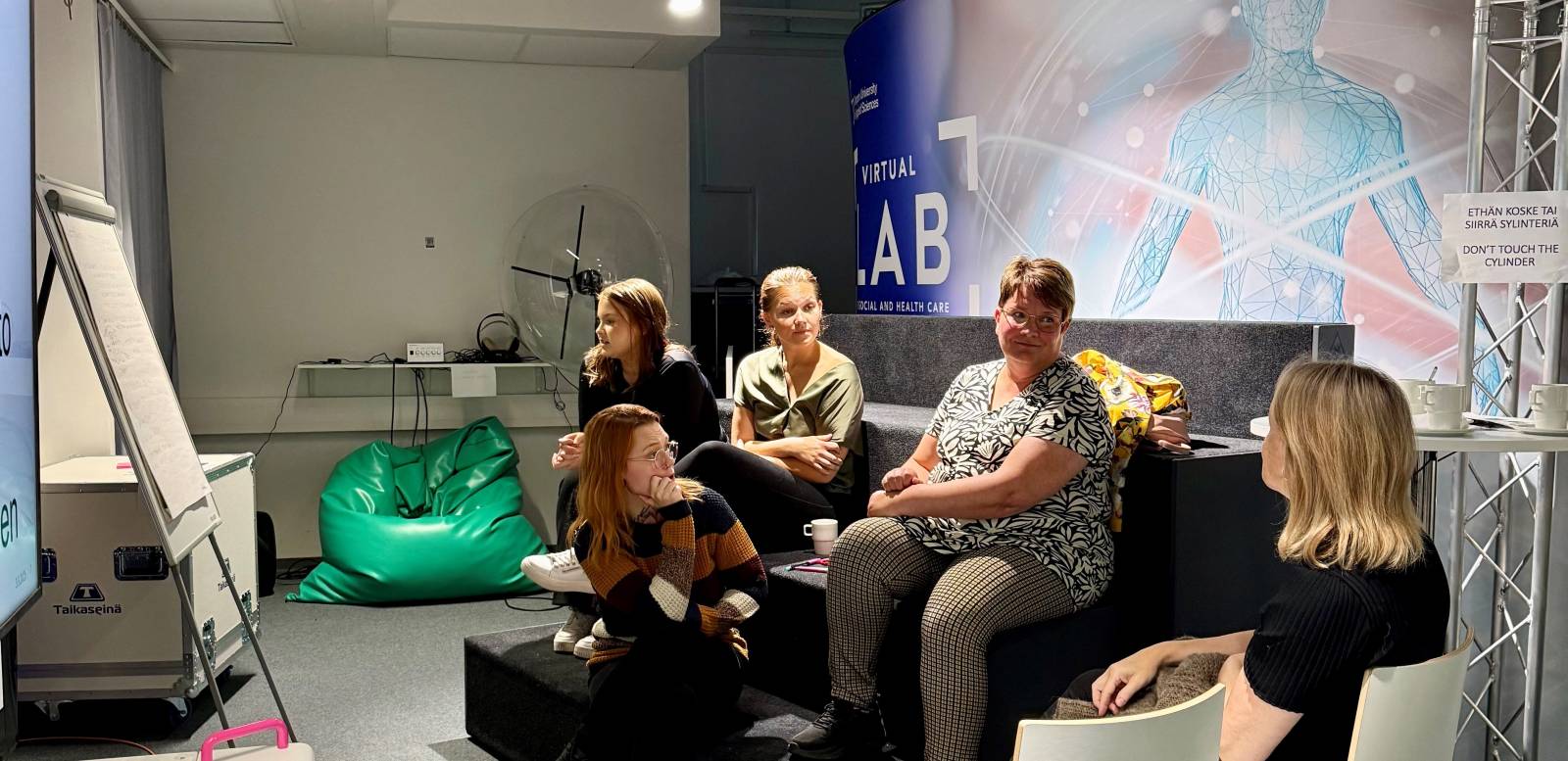
The idea for the workshops originated during a visit by Pirha’s outpatient services to the Sote Virtual Lab. During the visit, participants explored the lab’s functions and discussed opportunities for collaboration, future perspectives in social and healthcare, and emerging competence needs. A shared discussion highlighted the need to renew the skills of social and healthcare professionals, especially in innovation and development. Competence needs were also identified in the areas of healthcare digitalization and technology. The idea of a workshop series bringing together students and professionals was further enriched by including Master’s degree students in health technology, aiming to spark interaction between diverse experiences, mindsets, and expertise.
The workshops were designed by TAMK’s Master’s degree students in Health Technology: Jari-Juhani Helakorpi, Vesa Huotari, and Jussi Taala. Actively involved in the planning were also Tarja Kansanen, Head Nurse of Pirha’s outpatient services; Senior Lecturer and SVL Laboratory Coordinator Marjo Tienari; and the rest of the SVL development team. Participants in the workshops include staff from Pirha’s outpatient services and advanced-level nursing students from TAMK.
The workshop series consists of three sessions:
- September 3, 2025 – Vision Workshop
Theme: What will nursing look like at its best in 2035? - October 1, 2025 – Implementation Workshop
Theme: How can we turn visions into reality? - November 5, 2025 – Collaboration Workshop
Theme: What does the future collaboration between Pirha and TAMK’s Sote Virtual Lab look like?
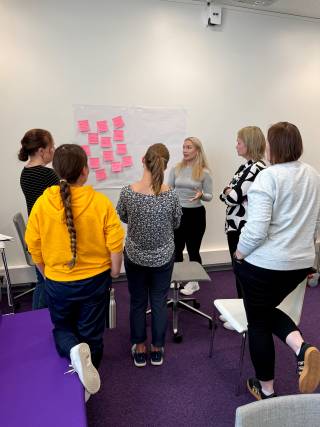
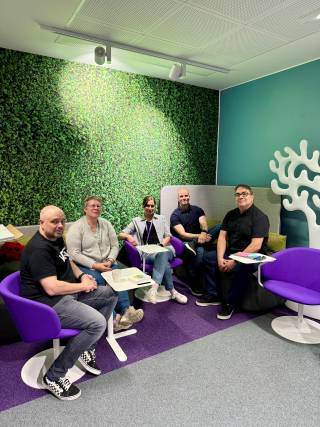
The vision workshop began with an introduction by Master’s students and Senior Lecturer Marjo Tienari on health technologies and why they are needed in social and healthcare now and in the future. After the introduction, professionals and students first worked individually and then collaboratively to develop ideas about what nursing will look like in 2035 across the following areas: prevention, documentation, home-delivered services, basic care, medication management, diagnostics, and patient interaction.
Ideas and insights that emerged included AI-assisted call queue management, automation of medication dispensing and preparation, logistics robots, sensor-based vital sign monitoring, genomic data, inter-regional collaboration, automated documentation, unified patient information systems, and smart measurement stations.
Feedback from the first workshop was encouraging and positive. Participants found the session eye-opening, engaging, and thought-provoking. The arrangements planned by the students were also praised.
From a teacher’s perspective, it was wonderful to see how professionals and students immersed themselves in open dialogue and bold thinking. Some of the ideas presented already exist as technologies. On the other hand, not everything discussed may be feasible by 2035—but that’s not the point. What matters is that the conversation has begun. We’ll return to more concrete topics in the next workshop.
Text: Jaana Vainionpää and Marjo Tienari
Photos: Jaana Vainionpää