


At the INTED2025 conference in Valencia, I had the privilege of attending a thought-provoking keynote session by Dr. Michelle Miller from Northern Arizona University, titled “Memory in the Age of Technology: What to Know, What to Remember, and Why It Still Matters for Teaching and Learning.”
Michelle Miller’s presentation delved into the evolving landscape of memory in the digital age. She began by addressing the common misconception that memory has become obsolete due to the advent of technologies like search engines, artificial intelligence, and augmented reality. These tools have indeed transformed how we access and store information, leading some to believe that students no longer need to focus on memorising key facts and findings in their fields.
However, Miller argued that this notion is a mirage. She highlighted new research on reasoning skills, which demonstrates that memory and thinking are far more intertwined and interdependent than previously thought. Human expertise, she emphasises, still relies heavily on a robust and accurate knowledge base, which cannot be entirely replaced by digital memory.
Importantly, memory is not a single, fixed capacity. It is all about technique, and memory is both teachable and learnable. Miller discussed the influence of technology on our memory and learning, noting that while digital tools can enhance our capabilities, they cannot replace the fundamental human processes of memory and learning. She also emphasised that memorising is an integral part of Bloom’s taxonomy (Picture 1.) and the learning process.
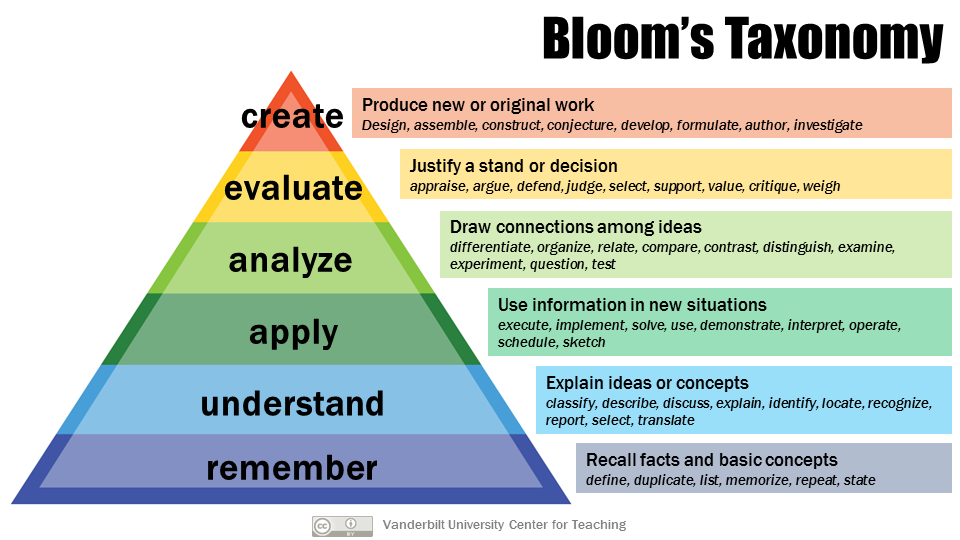
As educators, it is crucial to understand how memory works and to know what information students must remember. Remembering is the ability to recall and describe learned information, focusing on factual knowledge. It is recognising and recalling facts, often through rote memorisation, without much understanding. For example, memorising a new word in a language without knowing its tenses or pronunciation, or learning a term without understanding its meaning or application. Once basic facts are learned, we can move on to understanding according to Bloom’s taxonomy.
Technology’s influence on memory and learning
One of the key takeaways from Miller’s talk was the concept of the “Noble Truths of Memory” that all educators should embrace in the digital age. These truths underscore the importance of memory in fostering critical thinking, problem-solving, and deeper learning. By integrating these principles into their teaching practices, educators can better prepare students to navigate and thrive in a technology-rich world. She also pointed out trends to follow, such as devices becoming extensions of our minds and memories, and how digital tools can reinforce learning.
During her talk, Miller asked the audience if they were familiar with apps like Kahoot or Duolingo, highlighting how these tools can be effective in improving memory. For example, memorising a new word in a language without knowing its tenses or pronunciation, or learning a term without understanding its meaning or application. O nce basic facts are learned, we can move on to understanding.
Attending this keynote session was a valuable experience, reinforcing the enduring significance of memory in education. It was a powerful reminder that, even in the age of technology, what we know and remember still matters profoundly for teaching and learning.
The concept of memory can be likened to a “container” – the human mind is selective, and memory drives effort and activation, helping to focus, concentrate, and bring engagement. What do we choose to remember?
Sanna Ruhalahti, Principal Lecturer, Applied Research Centre (ARC), Tampere University of Applied Sciences
Participating in this INTED2025 conference was made possible by the funding from The Foundation for Economic Education and the support of my employer, TAMK UAS.
Read more about Dr Miller’s research and publications.
Watch her full talk: ”Memory in the Age of Technology: What to Know, What to Remember, and Why It Still Matters for Teaching and Learning”. INTED2025 Keynote.