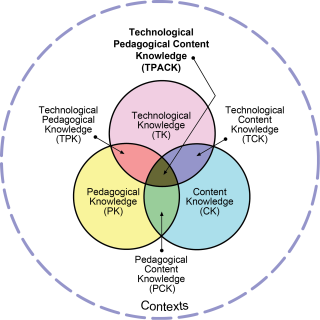
Digital tools and environments may be used in several ways to support the teaching and learning process. The options range from fully virtual courses to hybrid teaching which combines contact and distance learning, and utilising digital tools to support contact teaching. However, constructing virtual teaching implementations does not simply mean converting material into electronic form and bringing students together in a digital learning environment. Planning and highlighting the learning process is also an essential part of designing virtual teaching. Digital pedagogy is referred to when the specific characteristics of digital environments and their impact on the planning of teaching and the learning process are considered.
As it combines technological, pedagogical and content knowledge, the TPACK model (Mishra & Koehler, 2006) is often brought up in connection to digital pedagogy. The core idea is that the implementation of these elements together enhances the quality of digital learning. Teaching online or in an otherwise technology-enhanced manner is therefore not just about technology, pedagogy, or content knowledge, but about all of these together.