The choice of pedagogical methods and teaching strategies is shaped by several factors: the intended learning outcomes, pedagogical models and design principles, the digital learning environments available, and the current level of competence within the student group. This section provides guidance on pedagogical design and introduces the course design model.
When planning a course, it is important to recognise that competence develops through active student participation, involving both individual and group-based learning and practical experimentation. The deep learning of complex subject matter requires a combination of independent and collaborative efforts as well as guidance from the teacher. The pedagogical design of a course is influenced by the ability of teachers to apply their conceptions of human nature, knowledge and learning in practice. Through these choices, the teacher designs the learning experience using either a teacher-centred or learner-centred approach, not as isolated techniques but as methods aligned with the learning process.
When designing the learning process, the teacher considers which teaching and working methods will best support progress in each situation. The teacher identifies the sequence of learning and teaching steps from the perspectives of both the teacher and students. Course design involves planning the stages of learning, including those supervised by the teacher, those undertaken collaboratively within the student group, and those completed independently. Students advance along this structured pathway according to the teacher’s pedagogical script, which guides the learning process.
Course design model
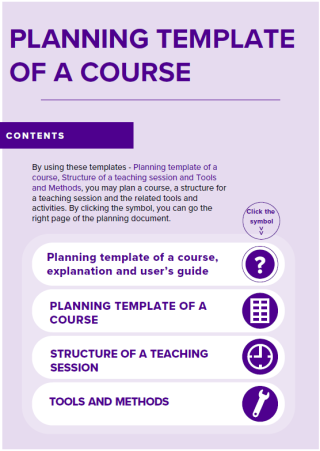
The course design template below (comprising the course design section, class structure template, and tools and working methods) can be used to plan the structure of an entire course as well as individual classes. The template provides a framework for designing complete study modules from start to finish and includes tips for selecting appropriate teaching tools.
The image below is a link that opens the full design template. The document contains interactive areas, including sections for marking the time allocated to each teaching session and for recording the planning of the entire course. By clicking the symbols, you can navigate to the relevant section of the PDF document, which can also be printed if desired. You can also open the planning template by clicking this link.
How to design a course using the competence-based approach?
When planning competence-based learning outcomes and assessment, teachers should take into account both the subject-specific skills and the generic, transferable skills that students are expected to develop during the course.
Consider the following questions to reflect on the competence-based approach within your course:
- How does my course fit within the overall degree programme?
- What competences have students already acquired before attending my course? What will they still need to learn after completing my course?
- What subject-specific skills will students develop during my course?
- How and where will they apply these skills in their future careers?
- What generic skills will students develop during my course?
- How will I assess the achievement of subject-specific and generic skills?
Checklist for course development
Tampere Universities has prepared checklists to support the planning and development of teaching. They can be used to both review previous courses and to design new ones. The checklists are primarily intended as a tool for teachers’ own reflection. Teachers are not expected to complete every item thoroughly as the checklists are designed to encourage teachers to reflect on course delivery from multiple perspectives.
TAMK’s checklist for delivering high-quality online courses