
Where Did It All Begin?
The idea for the workshop series emerged from Pirha’s outpatient services visit to the Sote Virtual Lab in spring 2025. During the visit, participants explored the lab’s activities and discussed opportunities for collaboration, future prospects in social and healthcare, and evolving competence needs. The discussions highlighted the need to renew professionals’ skills, particularly in innovation and development. Growing competence needs in healthcare digitalization and technology were also identified. From these starting points, the idea was born: workshops where students and professionals could meet and learn from each other. The concept was further enriched by including Master’s students in health technology, ensuring diverse experiences, perspectives, and expertise could intersect and lead to new solutions.
Progress of the Workshops
The planning of the workshop series was led by TAMK’s Master’s students in health technology: Jari-Juhani Helakorpi, Vesa Huotari, and Jussi Taala. Active contributors included Tarja Kansanen, Head Nurse of Pirha’s outpatient services, lecturer and SVL lab coordinator Marjo Tienari, and SVL’s core team.
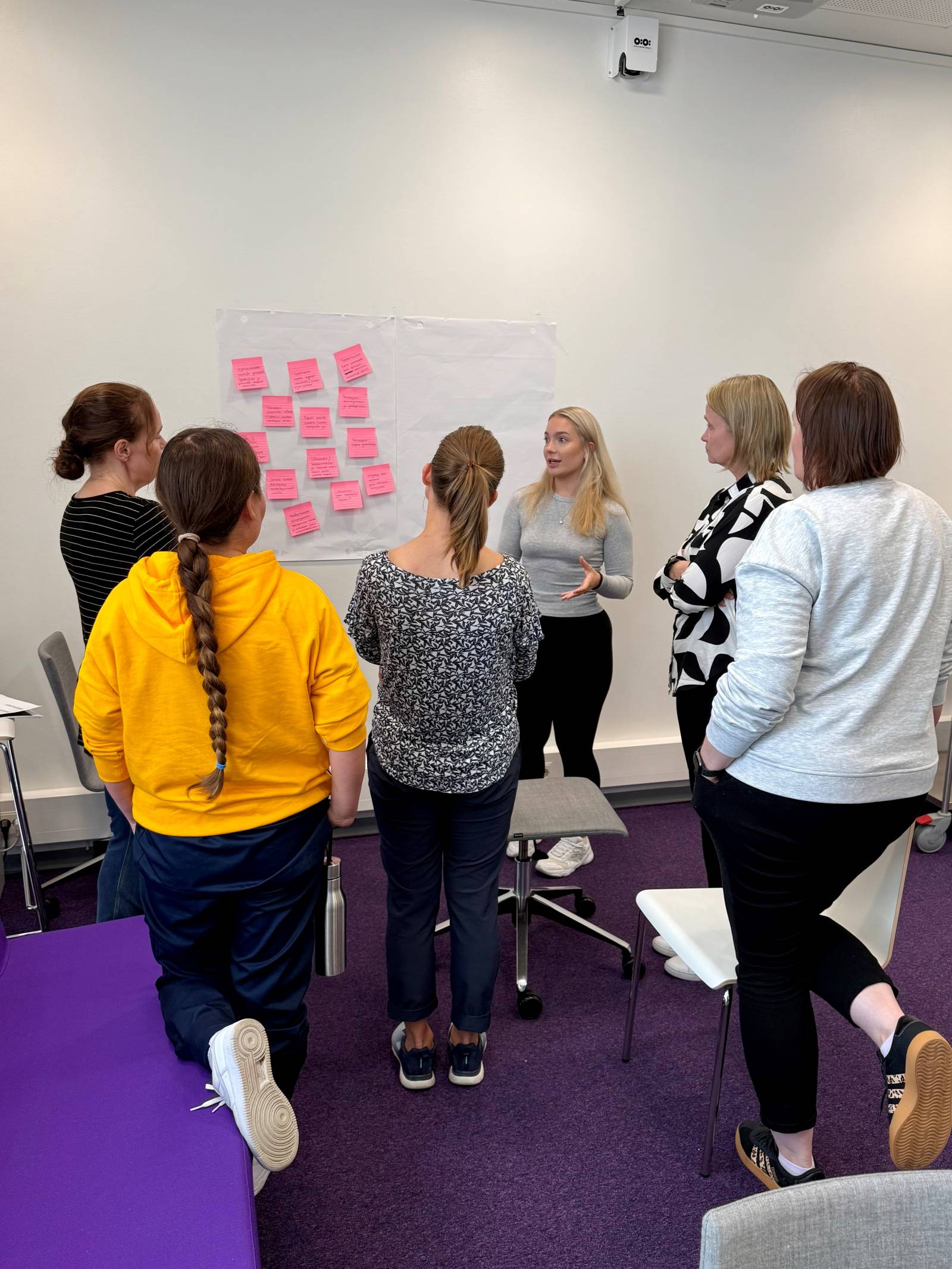
The first workshop took place in September 2025, focusing on how health technology solutions can become part of everyday practice and transform traditional healthcare workflows. Participants explored device implementation and development together with professionals. This workshop laid the foundation for shared understanding and highlighted key challenges and opportunities.
The second workshop in October took participants a step further—towards envisioning the future. Groups sketched future healthcare operations and technological solutions using comic strips, emphasizing efficiency and patient safety. Discussions underscored the need for open collaboration and new operating models.
The third workshop in early November focused on ideating new health technology products and services. Participants practiced pitching and articulating the benefits of innovations. Expert talks covered procurement and Living Lab activities. The workshop concluded with a discussion on future competence and education needs—and how TAMK can address them.
“The workshop series was an inspiring learning journey for us as facilitators. We strongly felt that we were able to convey the idea of technology’s potential in future healthcare. Through discussions and joint ideation, we noticed that many participants began to generate new ideas for developing their own work. This small but significant ‘technology awakening’ was also reflected in the feedback collected. The innovation workshops had clear goals, and each session had a detailed program structure. Ultimately, the workshops progressed flexibly, guided by participants’ insights and questions. An engaging, participant-driven atmosphere emerged, supporting both learning and future visioning. This atmosphere deepened collaboration and dialogue, turning the workshops into a cohesive experience that motivated everyone involved.” – Jari-Juhani, Vesa, and Jussi
Why Is Collaboration Important?
The collaboration in these workshops combined practical expertise with academic perspectives. When professionals and students work together, solutions emerge that are both innovative and realistic. Collaboration strengthens mutual understanding, accelerates the adoption of new technologies, and supports competence development on both sides. This is essential for healthcare services to meet future challenges.
How Could Collaboration Continue?
The workshop series demonstrated that combining expertise from different actors brings significant added value. Collaboration could continue in Living Lab environments, where new ideas can be tested in real-world settings. Student projects and theses also offer opportunities to develop solutions together with organizations. Regular development forums and networking events could ensure that ideas don’t remain on paper but move toward practical implementation.
“It’s great that we’ve achieved something so concrete together. A big thank you to Tarja and the Pirha team for their open-minded approach and willingness to take on the challenge. Let’s keep this excellent collaboration going.”
– Competence Manager Kirsi Mansikkamäki