
The Growing Challenge of Skill Shortages in Europe
Europe continues to face a persistent skills gap that threatens economic growth and innovation. Nearly four out of five small and medium‑sized enterprises struggle to find workers with the right skillsets, particularly in sectors essential to the green and digital transitions (European Commission [EC], 2025). European Union policy documents such as the European Skills Agenda (EC, 2025), and the Digital Education Action Plan (EC, 2020) underscore the need for modern, digitally enabled professional training systems.
The development of technology has already had a profound impact on the requirements and teaching practices in all fields of education, with digital technologies playing a particularly significant role in engineering education. Collaborative learning arrangements, where individuals work on real challenges, have been shown to foster critical thinking and innovation (Davis & Asikainen, 2025; Robinson & Sharma, 2025). Due to Finland’s current financial situation, there is a great need for this kind of specialised knowledge in the ever-changing skills landscape. The European Commission’s Union of Skills (2025) initiative responds to these challenges by promoting lifelong learning to strengthen competitiveness and resilience of industries. However, achieving these ambitious goals requires innovative approaches that integrate immersive technologies and pedagogical knowledge into educational systems.
Digital Twins in Industry and Education
Augmented and virtual realities are transforming professional education and training by providing immersive, interactive environments that connect theory with practice. In general, the emergence of Industry 4.0 represents a systemic shift characterised by digital transformation, automation, and intelligent systems (Liljaniemi, 2026). Different technologies offer different approaches to the development of teaching, learning and professional development at work. Augmented reality (AR) builds on this by projecting digital instructions onto real‑world objects, offering immediate, hands‑on guidance for tasks like maintaining or assembling machinery (Bacca et al., 2014). This technology helps users achieve tasks that would otherwise require manuals or expert supervision. Virtual realities (VRs) enable learners to perform complex activities—such as laboratory experiments, machining, or precision manufacturing—in controlled simulations, eliminating safety risks (Radianti et al., 2020). Both solutions boost learner engagement and knowledge retention, support remote participation, and ensure that high‑quality training is accessible from any location (Brauer et al., 2023; Liljaniemi & Paavilainen, 2025). Digital twin (figure 1.) is a virtual replica of a physical system that can provide realistic simulations and the ability to dynamically optimise and analyse system behaviour (Liljaniemi, 2026).
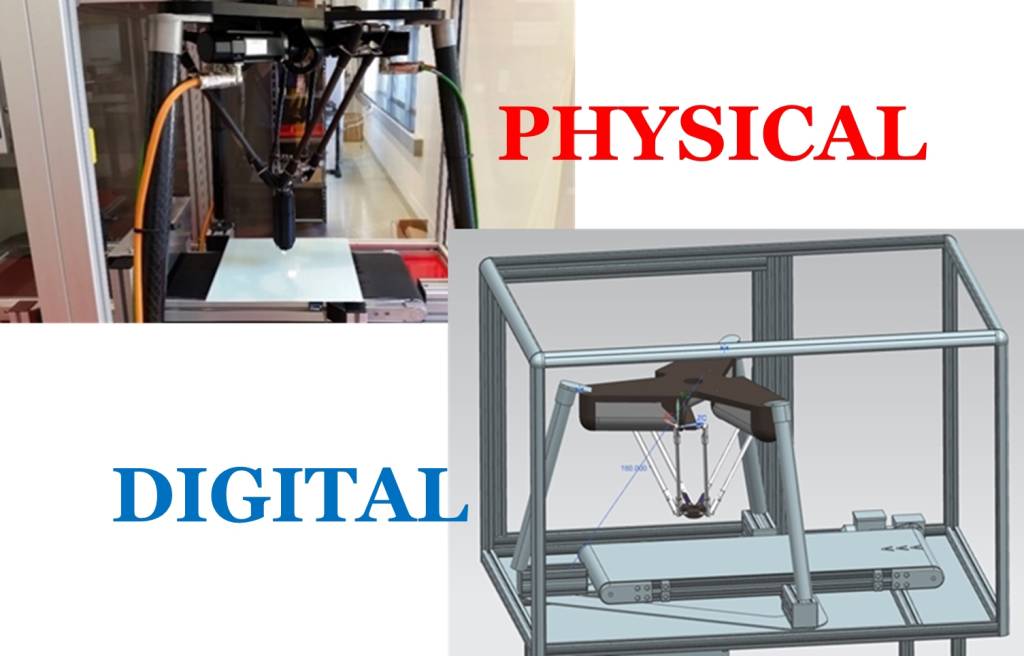
Figure 1 Digital Twins techonology offers students a hands-on learning experience, combining virtual models and real time data (Liljaniemi, 2026)
Literature reviews (Familoni & Onyebuchi, 2024; di Lanzo et al., 2020; Lampropoulos & Kinshuk, 2024) confirm educational value of AR/VR, highlighting their ability to build practical skills, encourage innovation, and minimize reliance on costly physical equipment (also Bacca et al., 2014; Radianti et al., 2020). However, there is a lack of measures to assess their pedagogical effectiveness and further clarification is required.
Digital twins are widely employed in a variety of industries. Liljaniemi’s recent dissertation (2026), titled “Re-innovating engineering education: The role of Digital Twin and emerging technologies,”, addresses the topic of growing importance in higher education. Liljaniemi investigates how digital twins, emerging technologies, and immersive learning environments can enhance engineering education by bridging theory and practice. His work offers timely insights into the development of professional competences in practice-based environments, making it highly relevant to our educational context at universities of applied sciences. As engineering education is one of TAMK’s core strengths, its perspectives on development and learning are particularly valuable in supporting our ongoing improvement and future-oriented practices. Even though a shared national ecosystem is being built within the framework of the Metaverse Finland network, for example, Finland also lacks a broader vision for developing this topic. The Liljaniemi study’s objective is to generate new insights into the applicability of digital tools in both educational and industrial contexts. It addresses current gaps in the literature, particularly regarding the maturity assessment of emerging technologies and the alignment of educational innovations with the needs of working life. These novel findings offer valuable guidance for institutions seeking to respond to the rapidly evolving demands of the digital and green transitions, and they highlight the importance of sustainability, adaptability, and collaboration in modern education.
Frameworks for Industry–Education Co‑development
The significance of Liljaniemi’s work (2026) lies in its focus on the potential impact of digital twins and related technologies on learning outcomes. The research demonstrates that, while these technologies can increase learning efficiency and student engagement, their successful implementation requires careful pedagogical planning, robust infrastructure, and phased deployment. The study highlights the need for models that integrate technological, pedagogical and industrial requirements. This need is addressed by the TPIK (Technological, Pedagogical and Industrial Knowledge) model and the OQEM (One Quarter Evaluation Method) maturity model. These frameworks aim to provide systematic approaches for technology assessment and curriculum co-development with industry partners, ensuring that educational innovations are both feasible and relevant to working life. Moreover, it aims to provide tools for estimating the suitability of AR/VR environments for educational applications at the present moment.
The research demonstrates that, while these technologies can increase learning efficiency and student engagement, their successful implementation requires careful pedagogical planning, robust infrastructure, and phased deployment.
Liljaniemi’s dissertation (2026) introduces new insights by systematically examining the pedagogical, technological and industrial aspects of digital twin adoption. The TPIK model offers a comprehensive framework for incorporating emerging technologies into professional education, aligning three interconnected knowledge domains. This approach emphasises that technological solutions must be grounded in pedagogy, connected to authentic industry practices and supported by relevant knowledge structures. Through collaborative analysis of these dimensions, the TPIK model assists educators and industry partners in identifying the potential of digital tools, including digital twins, augmented and virtual realities to enhance learning outcomes, pedagogical effectiveness and workplace relevance. The rapid development cycles of emerging technologies, including artificial intelligence (AI), robotics, augmented and virtual reality (AR/VR), and autonomous systems, pose challenges for their immediate adoption within educational practices (Zawacki-Richter et al., 2019). Liljaniemi (2026) presents the OQEM method, which offers a structured approach to assessing the feasibility and impact of technological innovations, including those in educational settings. It provides institutions with guidance on ensuring quality standards and evaluating the technological maturity of solutions prior to large-scale deployment. Together, the TPIK model and the OQEM method offer to inform a practical toolkit for designing, evaluating and scaling technology-enhanced learning environments in close collaboration with industry.
Towards Future‑Proof Professional Education
Integrative pedagogy (Tynjälä et al., 2020) involves developing models that enable higher education institutions and workplaces to collaborate in creating learning environments combining theory and practice. Furthermore, this approach emphasises the role of communities of practice in fostering the zone of proximal development (Tynjälä et al., 2020). Inspiring and innovative work-based training opportunities are required to facilitate continuous learning and reskilling in response to the ever-changing nature of the world of work. Union of Skills is a shared space for all those who shape learning. Better working life relevance of the training can open up new employment and career advancement opportunities at an individual level. At a societal level, establishing working connections within higher education institutions ensures a labour force is available, thereby increasing labour productivity. Ultimately, this will raise the employment rate and secure the financing of our welfare society (Brauer et al., 2020).
Digital twins, AR, and VR have considerable potential to enhance practical training, reduce environmental impact, and ensure that education systems remain adaptable, and aligned with both individual and societal needs.
In summary, the future of professional education and training in Europe—and particularly in universities of applied sciences—depends on embracing technological innovation and sustainability. Digital twins, AR, and VR have considerable potential to enhance practical training, reduce environmental impact, and ensure that education systems remain adaptable, and aligned with both individual and societal needs. Liljaniemi’s dissertation (2026) stands out for its practical relevance and its contribution of new knowledge to the field. It can also be recommended as reading material for anyone interested in the development of learning environments in engineering education and beyond. The research does not remain at the level of theory; rather, it offers concrete frameworks—such as the TPIK model and the OQEM method—that can be directly applied to curriculum development, technology assessment, and the co-creation of educational solutions with industry partners. These tools provide educators and institutions with actionable strategies for integrating digital twins and immersive technologies into professional education and training – re-innovating engineering education.
References
Bacca, J., Baldiris, S., Fabregat, R., Graf, S., & Kinshuk. (2014). Augmented reality trends in education: A systematic review of research and applications. Educational Technology & Society, 17(4), 133–149. http://www.jstor.org/stable/jeductechsoci.17.4.133
Brauer, S., Mäenpää, K., Tervaskanto, M., & Heikkinen, K-P. (2023). Smart Campus – Digitalisaatio ja kehittyvät teknologiat työssä ja oppimisessa. [Digitalization and emerging technologies in work and learning]. Ammattikasvatuksen aikakauskirja, 25(3), 10–28. https://doi.org/10.54329/akakk.137486
Brauer, S., Pajarre, E., Nikander, L., Häkkinen, R., & Kettunen, J. (2020). Kehittämishankkeet korkeakoulutuksen työelämärelevanssin edistäjänä. Ammattikasvatuksen aikakauskirja, 22(1), 8–25. https://journal.fi/akakk/article/view/91030
Davis, H., & Asikainen, E. (2025). From abstract and overarching to concrete and contextualized – competence-based digital open badges in operationalizing vocational teachers’ sustainability competences. Ammattikasvatuksen Aikakauskirja, 27(4), 40-57. https://doi.org/10.54329/akakk.178411
European Commission. (2020). Digital Education Action Plan 2021–2027. https://education.ec.europa.eu/focus-topics/digital-education/plan
European Commission. (2025). Union of Skills: European Skills Agenda. https://commission.europa.eu/topics/competitiveness/union-skills_en
Familoni, B. T., & Onyebuchi, N. C. (2024). Augmented and virtual reality in US education: A review — Analyzing the impact, effectiveness, and future prospects of AR/VR tools in enhancing learning experiences. International Journal of Applied Research in Social Sciences, 6(4), 642–663. https://doi.org/10.51594/ijarss.v6i4.1043
Lampropoulos, G., & Kinshuk. (2024). Virtual reality and gamification in education: A systematic review. Educational Technology Research and Development, 72, 1691–1785. https://doi.org/10.1007/s11423-024-10351-3
di Lanzo, J. A., Valentine, A., Sohel, F., Yapp, A. Y., Muparadzi, K. C., & Abdelmalek, M. (2020). A review of the uses of virtual reality in engineering education. Computer Applications in Engineering Education, 28(3), 748–763. https://doi.org/10.1002/cae.22243
Liljaniemi, A. (2026). Re-innovating engineering education: The role of Digital Twin and emerging technologies (Doctoral dissertation). Aalto University publication series Doctoral Theses, 14/2026. https://aaltodoc.aalto.fi/items/8e3aaf51-c54c-4f19-8e75-bc7f85e24f03
Liljaniemi, A., & Paavilainen, H. (2025). Enhancing engineering education through immersive environments — A study of the Holodeck VR system in hydraulics and pneumatics. Cogent Education, 12(1). https://doi.org/10.1080/2331186X.2025.2530900
Radianti, J., Majchrzak, T. A., Fromm, J., & Wohlgenannt, I. (2020). A systematic review of immersive virtual reality applications for higher education: Design elements, lessons learned, and research agenda. Computers & Education, 147, Article 103778. https://doi.org/10.1016/j.compedu.2019.103778
Robinson, O., & Sharma, R. (2025). Exploring cooperative and challenge-based learning strategies as catalysts for personal resonance and transformation within and beyond the classroom: A case study. Innovations in Education and Teaching International, 1–14. https://doi.org/10.1080/14703297.2025.2508856
Tynjälä, P., Virolainen, M., Heikkinen, H. L., & Virtanen, A. (2020). Promoting cooperation between educational institutions and workplaces: models of integrative pedagogy and connectivity revisited. In C. Aprea, V. Sappa, & R. Tenberg (Eds.), Konnektivität und lernortintegrierte Kompetenzentwicklung in der beruflichen Bildung / Connectivity and Integrative Competence Development in Vocational and Professional Education and Training (VET/PET) (pp. 19-40). Franz Steiner Verlag. Zeitschrift für Berufs- und Wirtschaftspädagogik : Beihefte (ZBW-B), 29.
Zawacki-Richter, O., Marín, V. I., Bond, M., & Gouverneur, F. (2019). Systematic review of research on artificial intelligence applications in higher education – where are the educators? International Journal of Educational Technology in Higher Education, 16(1), 39. https://doi.org/10.1186/s41239-019-0171-0
Author
Dr. Sanna Brauer, PhD, MA (Education), is a Senior Lecturer at Tampere University of Applied Sciences, Faculty of Pedagogical Innovations and Culture. Her work focuses on innovative approaches to competence-based learning and professional development, with pioneering research at the intersection of technology and pedagogy. In January 2026, she served as an opponent in Liljaniemi’s doctoral defence at Aalto University, School of Engineering. ORCID: 0000-0002-5303-6600
Photo: Pixabay