


Introduction
In line with the European Research Executive Agency’s definition, Excellence Hubs are designed to enhance regional innovation ecosystems by fostering collaboration between academia, industry, public authorities, and civil society, particularly in Widening countries and beyond. (European Commission, European Research Executive Agency) The term “Widening countries” refers to group of EU Member States and associated identified by the European Commission as having comparatively lower research and innovation performance within the framework of the Horizon Europe. These countries are targeted through specific measures to strengthen their participation in EU-funded research, reduce disparities in innovation capacity, and promote more balanced development across the European Research Area. (European Commission 2022) The UNINOVIS International Week in France, held on 23–27 March 2026, brought together Excellence Hub coordinators, project managers, Living Lab leaders, and other key stakeholders. The workshops aimed to develop the strategic framework of the UNINOVIS Excellence Hubs and to clarify their operational model.
Background on UNINOVIS and Excellence Hubs
UNINOVIS is a European University Alliance focused on Data Sciences, bringing together institutions including Sorbonne University, Technical University of Applied Sciences Würzburg-Schweinfurt, University of Campania Luigi Vanvitelli, Kauno kolegija Higher Education Institution, University of Málaga, University of Tirana, The Hague University of Applied Sciences, and Tampere University of Applied Sciences. The alliance is guided by its strategic “Data for L.I.F.E.” vision, which emphasises lifelong learning in data, integrated innovation ecosystems, fostering green and digital transitions, and achieving European excellence. Within this context, the establishment of seven interconnected Excellence Hubs represents a key structural mechanism to operationalise these ambitions. (UNINOVIS Data for L.I.F.E. European University)
These Excellence Hubs support lifelong learning among diverse stakeholder groups while promoting mobility for students, teachers, researchers, and staff, with recognition of academic and professional achievements. The hubs adopt a Living Lab approach, emphasising user-centred, co-creative, and real-life experimentation processes. Furthermore, efforts are underway to align the hubs with the standards of the European Network of Living Labs (ENoLL), reflecting its vision of enabling inclusive, cross-border, and cross-sectoral open innovation ecosystems. (ENoLL vision)
Excellence Hubs support lifelong learning among diverse stakeholder groups while promoting mobility for students, teachers, researchers, and staff, with recognition of academic and professional achievements.
Conceptually, an Excellence Hub—often referred to as a Centre of Excellence (CoE)—can be understood as a structured entity that consolidates specialised expertise, best practices, and strategic resources to support innovation and performance improvement. Such hubs function as focal points of knowledge and capability development, offering guidance, training, and methodological support while facilitating multi-actor collaboration across sectors. The literature on CoEs highlights their importance in diffusing knowledge, enhancing organisational learning, and strengthening innovation ecosystems (Frost et al., 2002). They are an organised and strategic framework aimed at concentrating expertise, stimulating innovation, and strengthening linkages between academia, industry, and public authorities to enhance both operational performance and regional development.
Excellence Hubs Within UNINOVIS
Within UNINOVIS, the Excellence Hubs are being developed as an operational framework for coordinating specialised modules that define standards, create reusable solutions, and deliver expert services across the network. By integrating high-level competences in domains such as artificial intelligence, robotics, cybersecurity, health and wellbeing technologies, service design, and continuous improvement, the hubs aim to increase capability maturity and accelerate innovation outcomes. This approach aligns with established knowledge management and organisational learning theories, which emphasise the role of shared knowledge structures in enhancing performance. (Novaka et al. 2000, Davenport & Prusak, 1998).
Functionally, the Excellence Hubs act both as knowledge “brain centres” and as engines for implementation. They contribute to shaping operational models, including Living Lab methodologies and certification approaches, while providing shared platforms, tools, and collaboration mechanisms. These structures enable joint research initiatives, project development, and cross-institutional cooperation, reflecting the principles of open innovation and the quadruple helix model (Carayannis & Campbell, 2009; Chesbrough, 2003).
The framework currently being co-created among UNINOVIS partners is designed to support Excellence Hub coordinators in defining service portfolios, governance structures, and impact measurement approaches. This co-creation process is essential for ensuring alignment across diverse institutional contexts while maintaining flexibility for local adaptation. From a strategic perspective, the framework aims to reduce fragmentation, mitigate risks, and enable the scaling of capabilities across the alliance. It also seeks to transform dispersed expertise into a shared competitive advantage, consistent with ecosystem-based innovation theories that highlight the importance of coordinated structures for value creation and knowledge integration (Adner, 2017).
Methodology
Methodologically, the development of UNINOVIS Excellence Hubs is guided by the Living Lab setup framework proposed by Bustamante and Overdiek (2020). This framework emphasises several key dimensions: mapping partner infrastructures and capabilities, ensuring realism through real-life user engagement, aligning communication and dissemination strategies, implementing systematic data collection and performance measurement, and supporting continuous documentation and evaluation. Additionally, the framework recognises the importance of serendipity, encouraging openness to unexpected insights and innovations emerging from collaborative experimentation.
The hubs adopt a Living Lab approach, emphasising user-centred, co-creative, and real-life experimentation processes.
While each Excellence Hub retains autonomy in defining its governance model and strategic priorities, all hubs are connected through shared principles of coordination, knowledge exchange, and scalability. Designated coordinators play a central role in ensuring the effective implementation of activities, facilitating data-driven decision-making, and enabling cross-hub learning. This interconnected structure allows successful models and practices to be scaled beyond individual hubs, extending their impact to associated partners and the broader innovation ecosystem.
The ongoing development of Excellence Hub roadmaps within each partner institution represents a critical step toward establishing a comprehensive UNINOVIS Excellence Hub ecosystem. These roadmaps will collectively inform a unified strategic direction, supporting long-term sustainability, cross-border collaboration, and ecosystem-wide impact.
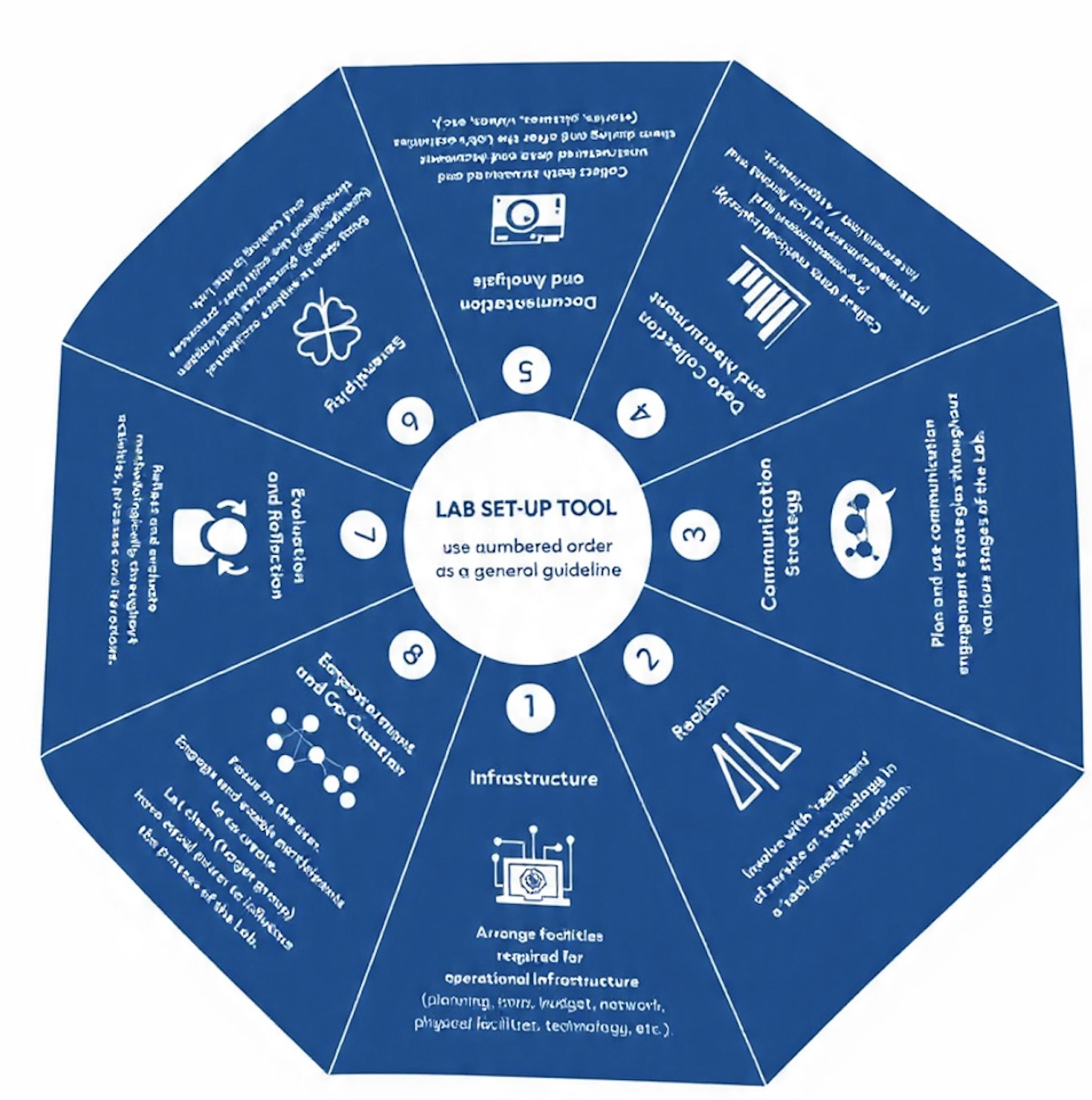
Figure 1 Lab Setup tool – Front side based on Bustamonte & Overdiek (2020) work (Overdiek, Geerts, de Lille, 2021, p. 79)
Conclusion
In conclusion, the co-creation of UNINOVIS Excellence Hub ecosystems represents a significant step toward building a future European University network grounded in excellence, collaboration, and innovation. Through interconnected Excellence Hubs, the alliance aims to strengthen and scale knowledge in Living Lab methodologies, innovation ecosystem development, and applied research across key domains, including health and wellbeing, artificial intelligence, robotics, and cross-border incubation services. By connecting expertise, infrastructures, and stakeholders across regions, this initiative has the potential to enhance innovation capacity, support societal transformation, and create a shared European platform for excellence in research, education, and innovation activities.
References
Adner, R. (2017). Ecosystem as structure: An actionable construct for strategy. Journal of management 43 (1), 39-58.
Carayannis, E. G., & Campbell, D. F. (2009). ‘Mode 3’and’Quadruple Helix’: toward a 21st century fractal innovation ecosystem. International journal of technology management 46 (3-4), 201-234.
Chesbrough, H. (2003). The logic of open innovation: managing intellectual property. California management review 45 (3), 33-58.
Davenport, T. H., & Prusak, L. (1998). Working knowledge: How organizations manage what they know. Harvard Business Press.
European Commission. European Research Executive Agency. Excellence Hubs. Read 27.3.2026, https://rea.ec.europa.eu/funding-and-grants/horizon-europe-widening-participation-and-spreading-excellence/excellence-hubs_en
EnoLL. Our Vision. Read 27.3.2026, https://enoll.org/who-we-are/#our-vision
European Commission (2022). Horizon Europe – Widening participation and strengthening the European Research Area. Read 8.4.2026, https://ec.europa.eu/info/funding-tenders/opportunities/docs/2021-2027/horizon/wp-call/2021-2022/wp-11-widening-participation-and-strengthening-the-european-research-area_horizon-2021-2022_en.pdf
Frost, T.S., Birkinshaw, J.M. and Ensign, P.C. (2002) Centers of excellence in multinational corporations. Strategy Management Journal 23, 997-1018. https://doi.org/10.1002/smj.273
Nonaka, I., Toyama, R., & Konno, N. (2000). SECI, Ba and leadership: a unified model of dynamic knowledge creation. Long range planning 33(1), 5-34.
Overdiek, A., Geerts H., de Lille, C. (2021) Innovating with labs. That’s how you do it!: Insights from Future-Proof Retail. Hague University of Applied Sciences
Uninovis Alliance. Uninovis Data for L.I.F.E European University. Read 27.3.2026. https://uninovis.eu/
Author
Pirita Ihamäki
PhD., M.Sc
Principal Lecturer – Innovation Management
UNINOVIS -project – Coordinator of Wellbeing Excellence Hub
Faculty of Industrial Engineering
Tampere University of Applied Science
ORDIC: 0000-0002-3303-8895
Photo: Image made with ChatGPT