

Introduction: Why Is Grinding a Critical Leverage Point
The transition of manufacturing toward more sustainable and digital practices does not occur through isolated technologies, but through the core processes of production. Grinding is a prime example. It is often an invisible stage in the production chain, yet it is precisely where material waste, energy consumption, surface quality, and component lifetime are determined.
This article examines how grinding functions as a leverage point in the green and digital transition, and how simulation-based training enables the externalization of tacit knowledge. It addresses two questions: how is grinding concretely linked to sustainability in production, and how does digital training reshape the development of grinding competence. In this article, grinding refers specifically to precision abrasive machining processes used in manufacturing to achieve the required dimensional accuracy, surface integrity, and functional performance of industrial components. Because grinding directly influences material utilization, energy consumption, surface quality, and component lifetime, it represents an important yet often overlooked contributor to more sustainable manufacturing. Typical applications include the finishing of high-value parts in sectors such as aerospace, automotive, energy, and precision engineering.
Grinding represents a point of convergence: it connects strategic objectives with operational execution.
The green transition is often framed at the macro level in terms of emissions reduction and resource efficiency (European Commission, 2021). At the same time, industry faces a skills gap and the need to update practical competencies to meet changing requirements (Technology Industries of Finland, 2024). These objectives, however, materialize at the micro level, in both individual process parameters and work steps. Grinding represents such a point of convergence: it connects strategic objectives with operational execution. When grinding is performed well, fewer defective parts are produced, waste is reduced, and production becomes more sustainable. This is not merely an operational benefit, but a direct contribution to the realization of the green transition in manufacturing.
Grinding and the Green Transition: Quality, Material, Energy, and Variability
A well-controlled grinding process reduces scrap, minimizes material loss, and extends product lifecycles (Dornfeld & Lee, 2008; Klocke, 2011; Jawahir et al., 2006). These sources collectively emphasize that final-stage manufacturing processes play a decisive role in determining both product quality and overall resource efficiency. Grinding, as one of the final operations, therefore has a disproportionate impact on sustainability outcomes.
Grinding also directly affects energy consumption and production efficiency (IEA, 2022), highlighting that process optimization is not only a quality issue but also an energy issue. The relationship between process control and energy use is well established in manufacturing research, particularly in energy-intensive finishing processes, such as grinding (Klocke, 2011).
The impact of grinding extends beyond material efficiency to quality. Every defective component implies rework, additional energy consumption and delay, translating into a direct environmental burden. A single defective part embodies material, energy, labor time, and process delay, reflecting the cost structure of the entire production system.
Because grinding occurs at the end of the production chain, its impact is cumulative: failure at this stage renders all preceding steps ineffective. From this perspective, grinding is not merely a finishing operation, but a strategic leverage point in the green transition.
The central challenge of grinding is not the success of an individual part, but the control of variability: how consistently quality, energy use, and outcomes can be maintained. In sustainability terms, the key is not maximizing isolated successes but minimizing process variation. This perspective aligns with sustainable manufacturing literature, which emphasizes system-level consistency over individual performance (Jawahir et al., 2006).
The Digital Transition: Simulation as a Learning Mechanism
Grinding is a knowledge-intensive process in which a significant portion of expertise is tacit: embodied understanding derived from sound, tactile feedback, material behavior, and machine response (Nonaka & Takeuchi, 1995; Nonaka & von Krogh, 2009). These foundational works highlight that tacit knowledge is not easily codified but emerges through interaction and practice, rather than direct instruction.
In practice, this is evident in how experienced operators detect anomalies from machine sound alone, adjust feed rates without explicit measurement, or anticipate workpiece behavior based on material and thermal conditions. Such insights are difficult to formalize, yet they critically shape process quality and outcomes.
Simulation-based training enables safe, repeatable practice environments where errors can be explored without material waste, machine wear, or immediate safety risks. As highlighted by Lateef (2010), simulation provides a controlled environment for experiential learning, where critical situations can be practiced without real-world consequences.
At the same time, research by Salas et al. (2009) emphasizes that the effectiveness of simulation does not primarily depend on physical realism, but on cognitive fidelity or the requirement for learners to make decisions and understand their consequences. This distinction is significant to understanding why simulation can support deeper learning even in technically complex domains such as grinding.
Simulation also enhances occupational safety by allowing risk scenarios to be practiced without real hazards. It supports understanding of process variability, which is essential for both quality control and resource efficiency.
Data and Approach
This article is based on development material accumulated during the Konepaja Akatemia 2.0 project (2023–2026), an initiative aimed at strengthening grinding-related competencies in vocational and industrial education through simulation-based learning. The project brought together educators, industry representatives, technical experts, and learners to explore how tacit grinding expertise can be externalized and transferred more effectively. A particular focus was placed on improving process understanding, supporting safe learning environments, and responding to emerging competence needs associated with the green and digital transition.
Participants engaged with grinding simulations designed to enhance their understanding of process parameters, decision-making, and the interdependencies between machine settings, material behavior, surface quality, and sustainability-related outcomes such as resource efficiency and component lifetime. Workshops and pilot activities provided opportunities to compare different ways of understanding grinding processes and to reflect on how simulation can support competence development.
The material used consists of workshop outputs, participant feedback, and development notes generated during the project. It has been examined through thematic analysis to identify key phenomena and recurring patterns related to process understanding, learning, and the role of simulation in competence development.
The approach is phenomenographic, focusing on how different actors understand the grinding process, learning, and the role of simulation (Marton & Booth, 1997). The purpose is not to describe the phenomenon itself, but rather the variation in how it is experienced, interpreted, and conceptualized by participants involved in the project.
Findings: Three Key Observations
The analysis yields three central observations:
1) grinding constitutes a critical point where quality, material efficiency, energy consumption, and variability converge
2) simulation enables the safe exploration of errors, reducing waste, and enhancing learning
3) tacit knowledge does not transfer directly but requires structures that make it visible and collectively shareable
Developing Grinding Competence in Practice
Within the Konepaja Akatemia 2.0 project, the grinding simulator provides a safe, practical environment for training, but its true value emerges when integrated into a structured learning process. In the DigiCampus online learning environment, learners acquire theoretical foundations prior to hands-on practice. Through workshops and industry collaboration, tacit knowledge is made visible and subsequently embedded into the simulator and learning materials.
This creates a sequence:
– theory before action
– simulation before machine operation
– guided reflection after practice
The result is not only a more efficient learning process, but also fewer defective components, improved safety, and more consistent production outcomes. As errors decrease, material waste and energy use are reduced. Training is therefore not a separate activity, but a mechanism that directly shapes production quality.
Knowledge Creation and Continuous Development
The Konepaja Akatemia 2.0 project’s development work can be examined retrospectively through the lens of knowledge creation. Field familiarization, expert interviews, and workshops generated observations, which were iteratively synthesized and refined. These insights informed the development of simulator features, learning structures, and pedagogical practices, which were subsequently tested and further developed in practice.
This process aligns with the SECI model (Nonaka & Takeuchi, 1995; Nonaka et al., 2000): socialization through shared experience, externalization through articulation, combination through structuring, and internalization through practice.
As further clarified by Nonaka & von Krogh (2009), this process does not imply that tacit knowledge is fully converted into explicit knowledge. Instead, it is progressively articulated and shared through interaction. This distinction is essential in understanding how simulation and structured learning environments can support competence development.
Conclusions: Grinding as a Leverage Point in the Green Transition
This article provides two main observations. First, grinding is linked to sustainability through material efficiency, energy use, and quality, all of which are governed by process variability. Second, digital training reshapes competence development by shifting the focus from the cost of errors to their controlled exploration, with direct implications for production efficiency and safety.
The green and digital transitions are not separate developments; they intersect at the interface of process and competence. Grinding makes this intersection particularly visible. Digitalization is not inherently “green.” Its value depends on where and how it is applied. When targeted at critical stages, such as grinding, its effects are directly reflected in reduced waste, lower energy consumption, and improved quality.
Digitalization is not inherently ‘green.’ Its value depends on where and how it is applied.
Ultimately, the issue is not technology itself, but how competence is constructed. Grinding provides a clear example of this. It demonstrates that the most significant impacts arise not from the most visible investments, but from critical process points where quality, energy, material efficiency, safety, and competence converge.
Grinding integrates three core dimensions of the green transition: material efficiency, energy efficiency, and quality control. For this reason, its role is often underestimated, yet highly consequential.
References
Dornfeld, D., & Lee, D. E. (2008). Precision manufacturing. Springer.
European Commission. (2021). The European Green Deal. https://commission.europa.eu/strategy-and-policy/priorities-2019-2024/european-green-deal_en
International Energy Agency IEA. (2022). Energy efficiency 2022. International Energy Agency. https://www.iea.org/reports/energy-efficiency-2022
Jawahir, I. S., Jayal, A. D., Badurdeen, F., & Dillon, O. W., Jr. (2010). Sustainable manufacturing: Modeling and optimization challenges at the product, process and system levels. CIRP Journal of Manufacturing Science and Technology, 2(3), 144–152. https://doi.org/10.1016/j.cirpj.2010.03.006
Klocke, F. (2011). Manufacturing processes 2: Grinding, honing, lapping. Springer.
Lateef, F. (2010). Simulation-based learning: Just like the real thing. Journal of Emergencies, Trauma, and Shock, 3(4), 348–352. https://doi.org/10.4103/0974-2700.70743
Marton, F., & Booth, S. (1997). Learning and awareness. Routledge.
Nonaka, I., & Takeuchi, H. (1995). The knowledge-creating company: How Japanese companies create the dynamics of innovation. Oxford University Press.
Nonaka, I., Toyama, R., & Konno, N. (2000). SECI, Ba and leadership: A unified model of dynamic knowledge creation. Long Range Planning, 33(1), 5–34. https://doi.org/10.1016/S0024-6301(99)00115-6
Nonaka, I., & von Krogh, G. (2009). Perspective—Tacit knowledge and knowledge conversion: Controversy and advancement in organizational knowledge creation theory. Organization Science, 20(3), 635–652. https://doi.org/10.1287/orsc.1080.0412
Salas, E., Wildman, J. L., & Piccolo, R. F. (2009). Using simulation-based training to enhance management education. Academy of Management Learning & Education, 8(4), 559–573. https://doi.org/10.5465/amle.8.4.zqr559
Technology Industries of Finland. (2024). Workforce and competence. https://teknologiateollisuus.fi/en/workforce-and-competence
Authors
Matti Kivimäki
Senior Lecturer
Tampere University of Applied Sciences (TAMK)
matti.kivimaki@tuni.fi
Pauliina Paukkala
Project Specialist
Tampere University of Applied Sciences (TAMK)
pauliina.paukkala@tuni.fi
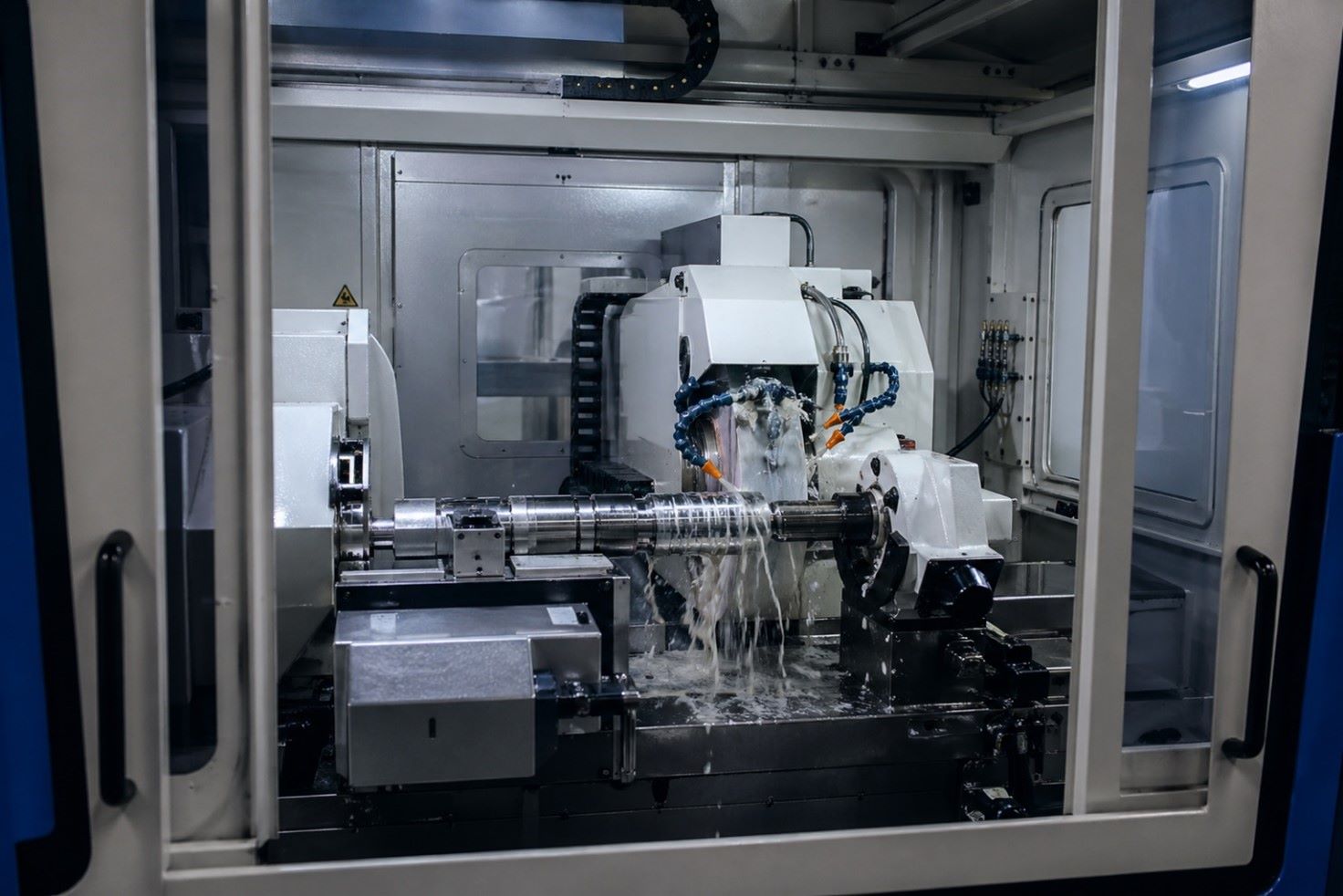
Photo: Illustration of a CNC grinding process (Open AI, ChatGPT)
AI disclosure statement
Artificial intelligence tools (OpenAI ChatGPT) were used to generate illustrative images supporting the communication of concepts presented in this article. The prompts were designed by the authors, who reviewed, edited, and approved all generated visual content. The authors assume full responsibility for the accuracy, integrity, and appropriateness of the final figures. AI-generated images were used exclusively for conceptual illustration and not for the presentation of empirical findings.
The image used was generated using OpenAI ChatGPT based on prompts designed by the authors (Pauliina Paukkala and Matti Kivimäki). The authors were responsible for defining the technical content, evaluating the generated outputs, and approving the final version. The image serves as a conceptual illustration and does not represent empirical data or an actual industrial photograph.