

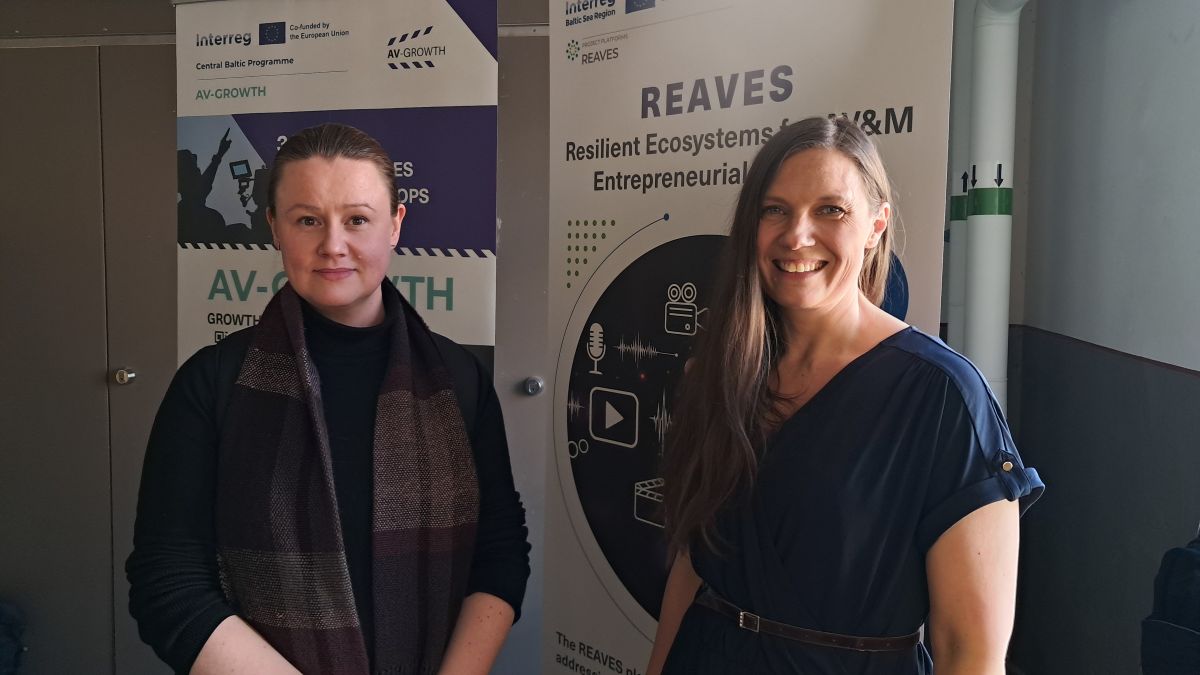
When regional innovation strategies are discussed, culture and creative industries (CCI) are increasingly recognised as important contributors to economic development and innovation. This perspective is also reflected in the new Tampere Region Development Strategy, which highlights the growing significance of the creative economy:
“At the heart of the creative economy lies creative, artistic, and cultural expertise. It is distinguished by its strong experiential value and capacity to create meaningful experiences. Intellectual property rights are a key enabler of research, development, and innovation (RDI) within the sector, while also supporting business growth, competitiveness, and scalability.” (Tampere Region Development Strategy 2026-2029, p. 48)
Despite this strategic recognition, an important question remains: to what extent are creative and cultural industries genuinely integrated into regional innovation systems, development programmes, business support structures, and public decision-making?
This question formed the starting point for the first joint workshop organised by the REAVES and Pirkanmaa Innovation Portfolio projects on 2 September 2026. Led by Tampere University of Applied Sciences, the workshop brought together stakeholders from the local CCI community, city of Tampere and higher education institutions to explore the current and desired role of creative sectors within regional development and innovation ecosystems.
The discussions highlighted both opportunities and challenges. While the value of creative industries is increasingly acknowledged in regional strategies, translating this recognition into practical support structures remains difficult. For example, many small creative businesses struggle to access support services because funding criteria and business development mechanisms are often designed around conventional growth-oriented business models.
The structural characteristics of the creative and cultural industries further complicate collaboration. The sector is dominated by small enterprises, freelancers, and project-based forms of work that operate under short-term and often precarious conditions. At the same time, value creation frequently relies on symbolic, cultural, and aesthetic dimensions rather than traditional measures of productivity (Comunian et al., 2014; Cruz et al., 2019). These differences can create barriers to collaboration with larger organisations, public institutions, and universities.
Nevertheless, workshop participants shared a common conviction: some of the most meaningful innovations emerge when creative professionals, businesses, researchers, public organisations, and communities work together. Turning this vision into reality, however, requires new approaches to collaboration and ecosystem development. Participants noted a significant structural mismatch between sectors, as creative actors often lack the time, resources, and incentives required to engage in collaboration on terms largely defined by academic or public-sector organisations.
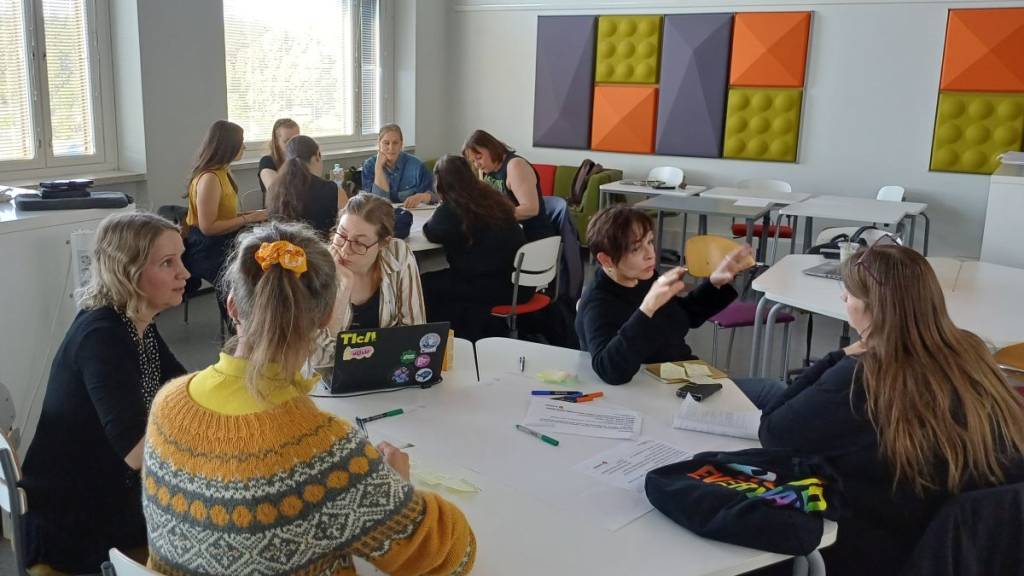
Figure 1 The workshop brought together stakeholders from the local CCI community, city of Tampere and higher education institutions (Photo: Minna Holopainen)
Creativity Is More Than a Sector
One of the strongest messages emerging from the workshop was that creativity should not be understood solely as a characteristic of artists or cultural organisations. Rather, creativity represents a fundamental problem-solving capability that becomes increasingly valuable when addressing complex societal, organisational, and technological challenges.
Involving creative actors earlier can help identify opportunities, challenge established assumptions, and generate alternative ways of thinking.
Despite this, traditional innovation and business development systems often fail to recognise creative expertise as a strategic resource. Participants observed that creative professionals are frequently invited to development processes only after challenges have already been defined. Instead, creative perspectives should be integrated from the outset. Involving creative actors earlier can help identify opportunities, challenge established assumptions, and generate alternative ways of thinking.
Achieving this requires overcoming long-standing divisions between sectors. Culture, business, research, and public administration continue to operate within separate institutional structures, each characterised by its own language, priorities, and funding mechanisms. Innovation ecosystems can become more resilient and dynamic when these boundaries are crossed and different forms of expertise are brought together.
At the same time, participants emphasised the importance of demonstrating the value of such collaboration. Creative sectors generate a wide range of economic, social, cultural, and wellbeing impacts, yet many of these remain poorly understood or insufficiently measured. Developing better approaches for recognising and assessing these impacts is therefore essential.
The Missing Ingredient: Coordination and Spaces for Collaboration
A recurring theme throughout the workshop was the recognition that innovation rarely follows a linear path. Breakthrough ideas often emerge through experimentation, unexpected encounters, and informal exchanges. Yet many public funding mechanisms, organisational structures, and performance indicators continue to prioritise measurable outputs and short-term results.
Creative sectors generate a wide range of economic, social, cultural, and wellbeing impacts, yet many of these remain poorly understood or insufficiently measured.
Creative collaboration, by contrast, depends on trust, curiosity, and opportunities to explore ideas without immediate pressure for commercial outcomes. Participants highlighted the importance of creating environments where people can meet, exchange perspectives, and develop ideas before commercialisation becomes the primary objective. In this sense, successful innovation ecosystems require room for experimentation and serendipity.
This perspective is particularly relevant for creative ecosystems, which are deeply embedded in local histories, identities, and socio-cultural contexts. As previous research suggests, externally imposed strategies and generic policy solutions often struggle to gain traction within such ecosystems (Dent et al., 2023; Pohjola et al., 2023). Consequently, cities and public organisations play an important role as facilitators, conveners, and connectors, rather than solely as regulators or funding providers.
What Are the Next Steps?
Throughout the workshop, one seemingly simple question repeatedly surfaced: Who is responsible for bringing people together?
Although the creative sector in Pirkanmaa contains substantial expertise and potential, many actors remain disconnected from one another. Small businesses, freelancers, associations, researchers, and public organisations frequently operate alongside each other rather than in collaboration. Participants therefore identified a need for a dedicated coordinating function capable of supporting ecosystem development over the long term. Such a function could facilitate partnership building, provide guidance on funding opportunities, support participation in EU programmes, and strengthen access to RDI advisory services.
The discussions also highlighted that the Tampere region has already produced a considerable body of reports, analyses, and strategic documents concerning the creative industries. However, fewer mechanisms currently exist for translating this knowledge into coordinated action within regional development processes. Consequently, the key challenge is no longer understanding the creative and cultural industries ecosystem, but activating it.
The workshop ultimately reinforced a central insight: creative ecosystems should not be viewed as peripheral to innovation policy but as an integral part of regional innovation capacity. Strengthening these ecosystems requires not only strategic recognition but also practical structures, dedicated coordination, and opportunities for meaningful cross-sector collaboration.
References
Comunian, R., Taylor, C., & Smith, D. (2014). The role of universities in the regional creative economies of the UK: Hidden protagonists and the challenge of knowledge transfer. European Planning Studies, 22(12), 2456–2476.
https://doi.org/10.1080/09654313.2013.790589
Cruz, A. R., Almeida, R. N., Costa, P., Gato, M. A., & Perestrelo, M. (2019). Knowledge transfer in the cultural and creative sector: Institutional aspects and perspectives from actors in selected Atlantic regions. Social Sciences, 8(3), 77.
https://doi.org/10.3390/socsci8030077
Dent, T., England, L., & Comunian, R. (2023). The challenges of developing sustainable cultural and creative ecosystems and the role of higher education institutions: Lessons from Dundee and Chatham, UK. Industry and Higher Education, 37(5), 563–576.
https://doi.org/10.1177/09504222231186367
Pohjola, T., Aalto, J., Lemmetyinen, A., & Nieminen, L. (2023). A scene-setter, matchmaker, or co-creator? The role of the HEI in the CCI ecosystem engagement when branding a place. Industry and Higher Education, 37(5), 586–594.
https://doi.org/10.1177/09504222231177982
Tampere Region Development Strategy 2026-2029 (2025). Accessed 3rd Sept, 2026
Author
Maria Salomaa
Senior researcher, Transformative Value Creation in Renewing Economy (TRaCE)
Faculty of Business and Media
Tampere University of Applied Sciences
maria.salomaa@tuni.fi
ORCID: 0000-0002-4415-0161
Photo: Maria Salomaa