

Training pilots responded to competence needs
Social and health care professionals often meet people whose lives have been affected by trauma, crisis, or long-term adversity. Trauma-informed practice helps professionals recognise these experiences and take them into account in services, work communities, and everyday interaction.
The practice is based on principles such as safety, trust, collaboration, empowerment, and gender and cultural sensitivity. The aim is to reduce the risk of retraumatisation and to support recovery and participation among both clients and employees (Sweeney et al., 2018; Berring et al., 2024).
The Trauma-Informed Practice project funded by the European Union was implemented in 2023–2026 by Laurea University of Applied Sciences, Tampere University of Applied Sciences and Turku University of Applied Sciences. Project partners also include the wellbeing services counties of Pirkanmaa, Southwest Finland, Western Uusimaa, and Päijät-Häme. The project aims to strengthen trauma-informed competence in social and healthcare services through the development and evaluation of a training model that supports both professional practice and the creation of trauma-informed work communities. Eight training pilots were organised in 2024–2025 for 228 social and health care professionals. The pilots included orientation videos, three in-person training days, supplementary materials, and writing a learning diary.
Competence was strengthened through training
The impact of the training was assessed before the pilots, immediately after the training days, and six months later. Data was collected through both quantitative and qualitative surveys. The results show that participants’ competence in trauma-informed practice increased. They gained knowledge, strengthened their practical application skills, and understood the multidimensional and systemic nature of the approach better. The participants also deepened their understanding of how trauma-informed practice relates to their own professional role. Participants reported that they were better able to apply trauma-informed practice in encounters with clients, patients, and colleagues. In this sense, the training did not remain at the level of theory but supported everyday professional action.
Body awareness and reflection support change
Body awareness and reflection were central mechanisms of change. Body awareness means the ability to recognise and regulate bodily sensations, movements and tension, and to understand how bodily experiences are connected to the mind and behaviour (Solano López & Moore, 2019; Price & Hooven, 2018).
In the training pilots, body awareness was strengthened through embodied and experiential exercises supported by theoretical teaching. Body awareness helped participants translate theoretical knowledge of trauma-informed practice into practical skills and professional action. The findings also indicate that reflection supported this change by helping participants integrate theory with practice. This interpretation is consistent with previous literature describing reflection as a means of supporting learning and professional development, including the application of theory to practice (Harvey et al., 2025; Bolton & Delderfield, 2018).
Professional growth and occupational well-being as outcomes
The training supported professional growth. Participants described a clearer professional identity, stronger reflectivity and, for some, a more active role in developing trauma-informed practices in their own work community.
The assessment also indicated that the training strengthened perceived occupational well-being. This was especially visible in the open-ended responses both immediately after the training and in the follow-up measurement 6 months after the training. The findings suggest that trauma-informed practice can support both client work and professionals’ wellbeing at work.
The effects varied between participants. Individual starting points, needs and goals influenced how the training was experienced. For this reason, trauma-informed training should be supported by organisational practices that enable new ways of working to become part of everyday work.
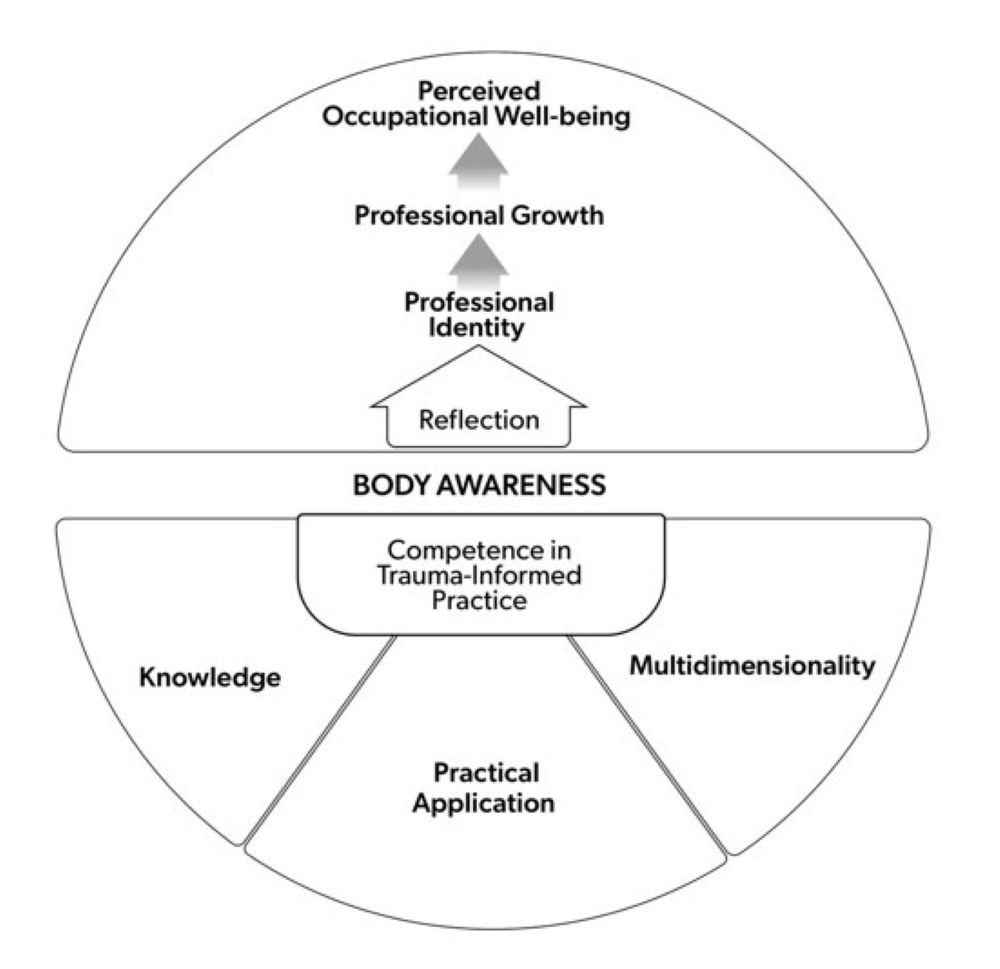
Figure 1 Key effects of the trauma-informed practice training pilots and their interconnections
Towards trauma-informed agency
The training pilots show that trauma-informed practice can be strengthened through theory, embodied learning, and reflection. The results highlight that competence development is not only an individual learning outcome but also a workplace-level process. When organisations support safety, trust and participation, professionals have better opportunities to develop trauma-informed agency in everyday work.
Generative AI was used to support translation, language editing and structural refinement of the manuscript. The authors are responsible for the content, interpretation of results and use of sources
References
Berring, L. L., Holm, T., Hansen, J. P., Delcomyn, C. L., Søndergaard, R., & Hvidhjelm, J. (2024). Implementing trauma-informed care—settings, definitions, interventions, measures, and implementation across settings: A scoping review. Healthcare, 12(9), 908. https://doi.org/10.3390/healthcare12090908
Bolton, G., & Delderfield, R. (2018). Reflective practice: Writing and professional development (5th ed.). London: SAGE.
Harvey, M., Walkerden, G., Semple, A., McLachlan, K., Lloyd, K., & Bosanquet, A. (2025). Reflecting on reflective practice: issues, possibilities and guidance principles. Higher Education Research & Development, 44(7), 1849–1857. https://doi.org/10.1080/07294360.2025.2463517
Price, C. J., & Hooven, C. (2018). Interoceptive awareness skills for emotion regulation: Theory and approach of mindful awareness in body-oriented therapy (MABT). Frontiers in Psychology, 9, 798. https://doi.org/10.3389/fpsyg.2018.00798
Solano López, A. L., & Moore, S. (2019). Dimensions of body-awareness and depressed mood and anxiety. Western Journal of Nursing Research, 41(6), 834–853. https://doi.org/10.1177/0193945918798374
Sweeney, A., Filson, B., Kennedy, A., Collinson, L., & Gillard, S. (2018). (Mis)understanding trauma-informed approaches in mental health. Journal of Mental Health, 27(5), 383–387. https://doi.org/10.1080/09638237.2018.1520973
The Trauma-Informed Practice development project aims to strengthen trauma-informed competence in social and healthcare services through the development and evaluation of a training model that supports both professional practice and the creation of trauma-informed work communities. The project is funded by the European Union (2023–2026) is carried out in collaboration with Laurea University of Applied Sciences, Tampere University of Applied Sciences, and Turku University of Applied Sciences. Project partners also include the wellbeing services counties of Pirkanmaa, Southwest Finland, Western Uusimaa, and Päijät-Häme.
Authors
Johanna Vilppola, Tampere University of Applied Sciences, ORCID: 0000-0002-4707-5005
Eeva-Mari Miettinen, Tampere University of Applied Sciences
Irene Pylkkänen, Laurea University of Applied Sciences, ORCID: 0000-0002-9260-6987
Irina Katajisto-Korhonen, Turku University of Applied Sciences, ORCID: 0000-0001-9978-9942
Heidi Leinonen, Laurea University of Applied Sciences, ORCID: 0009-0009-7024-2658
Elina Kauhanen, Laurea University of Applied Sciences
Satu Takala, Turku University of Applied Sciences, ORCID: 0000-0003-3758-8787
Outi Konsell, Turku University of Applied Sciences
Erja Kyllönen, Tampere University of Applied Sciences
Pekka Stenfors, Turku University of Applied Sciences
Photo: The Trauma-Informed Practice development project