

Introduction
A prototype is often understood as an early version of a product whose purpose is to iteratively approach a final solution. This article argues that such an interpretation is both historically and pedagogically insufficient. Instead, the prototype is examined as a mechanism through which decisions are exposed to reality and their robustness becomes visible.
Drawing on the Konepaja-Akatemia 2.0 project, the article shows that a prototype functions simultaneously as a physical artefact, a pedagogical intervention, and a cognitive test. Furthermore, an extended concept of prototyping is proposed, where the prototype serves as a mechanism for enabling knowledge transfer and as an interface – akin to a digital twin – between the physical and the intangible.
Prototyping as a Tool for Decision-Making: Historical and Theoretical Foundations
Ultimately, a prototype does not tell whether a solution works; it reveals whether the thinking behind it holds.
The roots of prototyping trace back to ancient Greece, where the term referred to the first concrete manifestation of an idea. Historically, a prototype was not a product but a means of examining an idea before its final realization. Renaissance engineers relied on physical models in situations where computational methods were insufficient. These models served to make risks visible and to enable decisions to be revised in time (Ferguson, 1992; Petroski, 1996).
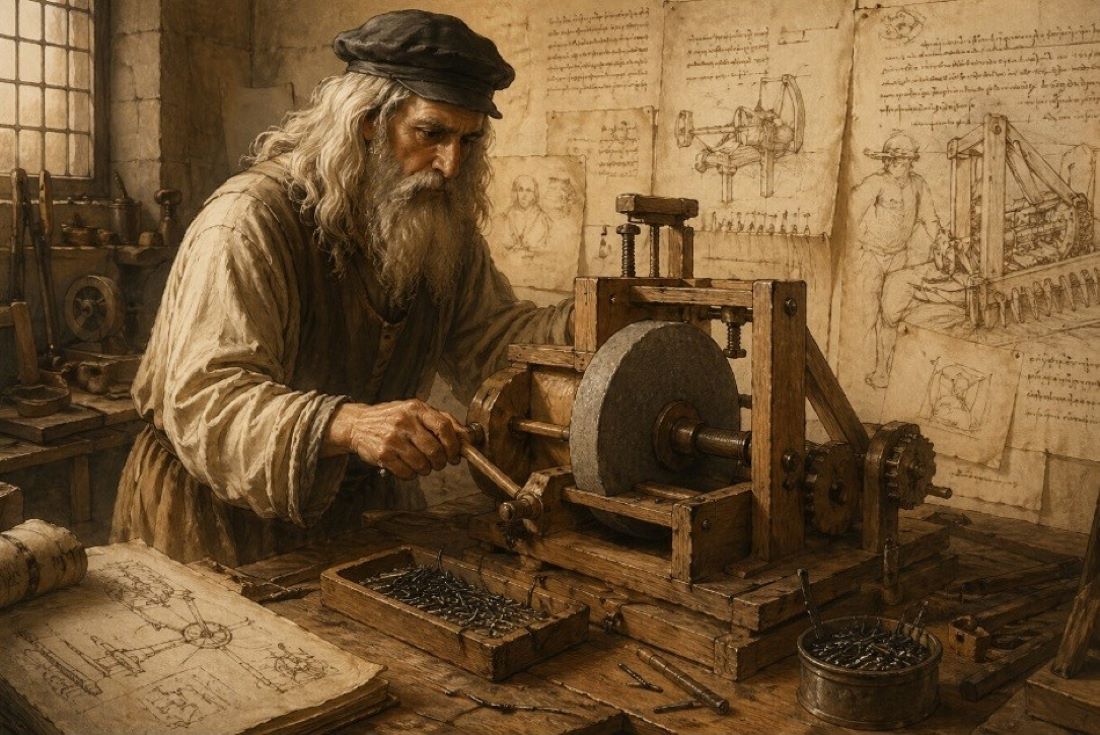
Figure 1 Early-stage prototype illustrating fragmented conceptualization and initial experimentation (AI-generated image: OpenAI ChatGPT, 2026)
According to Schön (1983), professional practice can be understood as a reflective conversation with the situation. In this dialogue, the prototype functions as a medium through which reality provides feedback, forcing the actor to refine their thinking. In product development research, prototypes are seen as mechanisms for reducing uncertainty and comparing alternatives (Clark & Wheelwright, 1993).
Together, these perspectives suggest that a prototype is not a phase but a mechanism: it operationalizes decisions as tests and makes underlying assumptions visible.
Prototyping in the Machine Shop: From Functionality to Revealing Decisions
In a machine shop, a prototype takes the form of a physical object, manufactured using real processes and exposed to real constraints. This makes it both valuable and risky. Due to its concreteness, a prototype easily appears as a small product: it functions, it endures, and it can be installed, seemingly fulfilling the characteristics of a finished solution.
Here lies a critical misconception. The correctness of the decision has not yet been established, even if the implementation appears successful. This often leads to premature lock-in, where the prototype shifts from being a test to being perceived as proof.

Figure 2 Intermediate-stage prototype showing the transition toward a more structured and integrated simulation concept (AI-generated image: OpenAI ChatGPT, 2026)
Within the Konepaja-Akatemia 2.0 project, the challenge was not initially in execution, but in defining what was actually being built. In the early phase, significant time was spent struggling with the question of what the grinding simulator to be created in the project should be like, and how to move from an unstructured starting point to a coherent model.
At the outset, knowledge related to grinding was fragmented. It existed in different places, embedded in individual experience, practices, and interpretations, rather than as a structured whole. The problem was not the absence of knowledge, but the absence of a shared and constructively organized understanding.
In practice, the process did not begin with building a solution, but with making sense of the problem itself. Progress required moving from a situation where “everything was everywhere” to one where key elements could be identified, articulated, and connected into a meaningful structure. The process was not linear but iterative and at times fragmented, requiring repeated redefinition of both the problem and the solution. Decisions were often made under conditions where both the problem and the criteria for evaluating solutions were still evolving, making it difficult to distinguish between a technically valid solution and a conceptually correct one.
The true value of a prototype lies not in its functionality, but in what it reveals about decision-making—often before any concrete solution is even clearly defined.
Only after this transition—from dispersed knowledge to a structured conceptual model—did it become possible to define what the simulator actually needed to represent. In this sense, the most critical phase of prototyping was not technical implementation, but the gradual clarification of what was being decided and why. This demonstrates that the true value of a prototype lies not in its functionality, but in what it reveals about decision-making, often before any concrete solution is even clearly defined.
Prototyping as a Learning Infrastructure: Pedagogical Intervention and SECI
When viewed pedagogically, the role of the prototype changes fundamentally. It is no longer merely a tool for making, but an intervention that forces thinking to become visible. Learning shifts from abstract discussion to concrete choices, and error transforms from failure into information. This shift becomes particularly evident as the learner is required to explicitly justify their decisions. In this sense, prototyping does not increase learning linearly but restructures it.
In the Konepaja-Akatemia 2.0 project, this approach was deepened using the SECI model (Nonaka & Takeuchi, 1995). Tacit knowledge, initially embedded in the practices of experienced professionals, was systematically externalized through observation, articulation, structuring, and application.
The significance of this process extends beyond making knowledge transferable or accelerating learning. More fundamentally, it transforms knowledge into a structural resource. It is no longer confined to individuals but collectively constructed and continuously developed.
From this perspective, the prototype functions as an intervention that makes thinking visible and renders action reflective in relation to the situation, not only retrospectively but also during action (Schön, 1983). Rather than increasing learning linearly, prototyping restructures it such that action, reflection, and renewed experimentation are linked into an iterative cycle (Kolb, 1984).
Extending the Prototype: Digital Twin and Knowledge Transfer
The grinding simulator functions as a digital twin that connects physical activity with the thinking behind it (Grieves & Vickers, 2017). It does not merely model the process but makes visible the decision-making and perception embedded within it.
In this context, the digital twin acts as a bridge between the physical and the intangible. Physical work involves machines, materials, and motion, while the intangible dimension involves interpretation and decision-making. The simulator integrates these levels, allowing them to be examined as a unified whole.
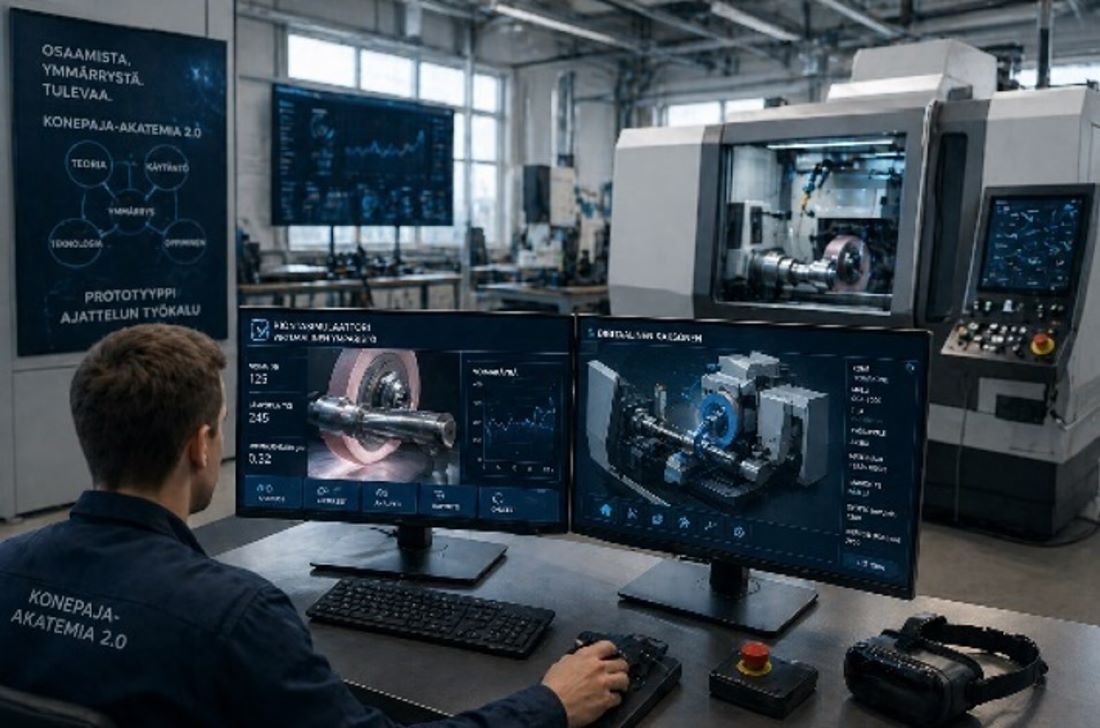
Figure 3 Final-stage prototype representing the integration of simulation, decision-making, and pedagogical structure within the Konepaja-Akatemia 2.0 project (AI-generated image: OpenAI ChatGPT, 2026)
Can such a virtual environment be considered a prototype? If defined by function, the answer is “yes.” The simulator tests assumptions about knowledge transfer, reveals bottlenecks in learning, and evolves iteratively. At the same time, it enables a separation between decision-making and execution that is not possible with purely physical prototypes.
In practice, this manifests as a learning environment where errors can be repeated, analyzed, and understood systematically. Learning shifts from reactive to proactive, and understanding is built incrementally without material waste or risk. In this context, the prototype is no longer merely an artefact, but an environment that enables access to knowledge that would otherwise only emerge through experience.
Key Findings and Synthesis
Figure 4 illustrates prototyping as a sequential but iterative process through which action is transformed into structured learning and knowledge transfer. The process begins with concrete action under real-world constraints, represented by the prototype itself. The second stage exposes the quality of decision-making by revealing incorrect assumptions, misdefined problems, false customer value, and contextual mismatches.
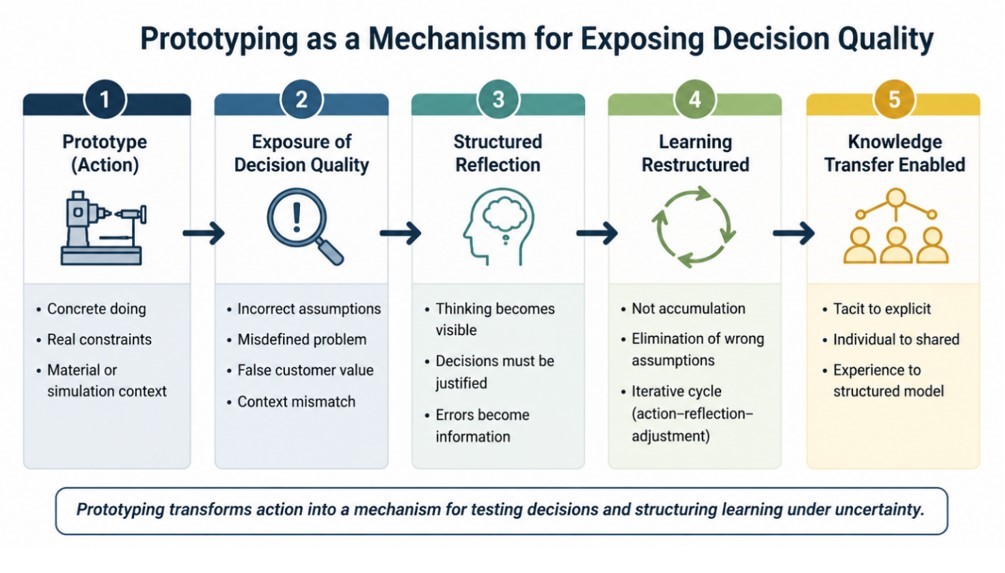
Figure 4 Prototyping as a mechanism for exposing decision quality and enabling knowledge transfer (Authors’ conceptualization; AI-generated visualization: OpenAI ChatGPT, 2026)
The third stage emphasizes structured reflection, where thinking becomes visible, decisions must be justified, and errors are reframed as information rather than failure. The fourth stage illustrates how learning is restructured through iterative cycles of action, reflection, and adjustment rather than through simple accumulation of knowledge. Finally, the process enables knowledge transfer by transforming tacit, individual experience into shared and structured understanding.
Rather than depicting prototyping as a linear development phase, the figure conceptualizes it as a mechanism for testing decisions and structuring learning under uncertainty.
Key findings
The first key finding is that prototypes make implicit assumptions visible, particularly in situations where decisions rely on tacit knowledge or incomplete understanding.
Figure 5 illustrates this transition visually through the evolution of the simulator environment. Early prototype stages were characterized by fragmented understanding, isolated components, and partially disconnected representations of the grinding process. As development progressed, these elements became increasingly integrated into a more coherent conceptual and pedagogical structure. In this sense, the image does not merely document technical development but illustrates the gradual transformation of dispersed expertise into a shared and structured understanding.
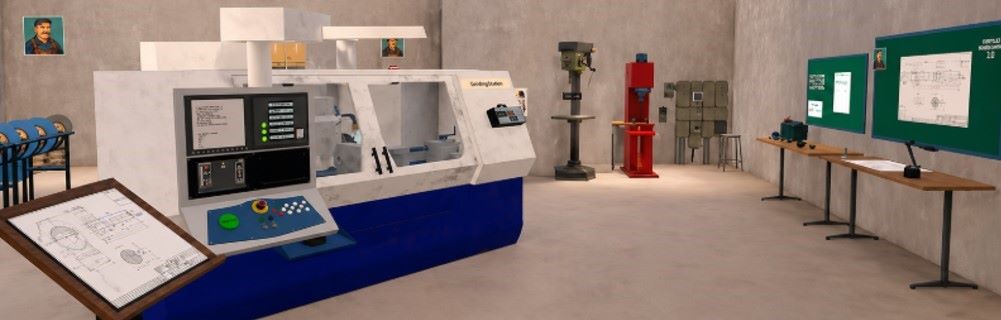
Figure 5 Illustration adapted from the Konepaja-Akatemia 2.0 project presentation video, highlighting the transition from fragmented knowledge to a structured conceptual model (AI-assisted image composition: OpenAI ChatGPT, 2026)
The second finding relates to learning: prototyping shifts the focus from correct answers to understanding errors. Learning is not based on accumulating knowledge, but on systematically eliminating incorrect assumptions.
The key finding is that prototypes make implicit assumptions visible, particularly in situations where decisions rely on tacit knowledge or incomplete understanding.
The third finding concerns the expansion of the prototype concept. Prototypes are not limited to physical artefacts but can also exist as digital and pedagogical structures that enable knowledge transfer. Based on these findings, the prototype can be understood as a structure that integrates decision-making, learning, and action into a unified system.
Prototyping at the Interface of Thinking and Reality – Conclusions
A prototype should not be viewed as an unfinished version of a product, but as a situation where a decision encounters reality for the first time. Its value lies not in its proximity to a final solution, but in what it reveals about the quality of thinking.
This perspective fundamentally redefines the role of prototyping. It shifts the focus from outcomes to the thinking process and makes explicit that technical functionality alone does not guarantee a correct decision.
Based on the Konepaja-Akatemia 2.0 project, the prototype can be understood as a broader mechanism that integrates technology, decision-making, and learning. Taken together, it functions as a cognitive infrastructure through which thinking develops systematically under uncertainty. For organizations, this implies that prototyping should not be treated merely as a development phase, but as a deliberate mechanism for testing decisions, structuring learning, and accelerating the transfer of critical knowledge.
AI-Assisted Writing Disclosure
AI-assisted tools were used for language refinement, illustration and structural support during the writing process. The authors are responsible for the final content, interpretations, and conclusions.
References
Clark, K. B. & Wheelwright, S. C. (1993). Managing New Product and Process Development: Text and Cases. Free Press.
Ferguson, E. S. (1992). Engineering and the Mind’s Eye. MIT Press.
Grieves, M. & Vickers, J. (2017). Digital twin: mitigating unpredictable, undesirable emergent behavior in complex systems. In F. Boulanger, C. Boulanger, & D. Krob (Eds.), Transdisciplinary Perspectives on Complex Systems (pp. 85–113). Springer.
Kolb, D. A. (1984). Experiential Learning: Experience as the Source of Learning and Development. Prentice-Hall.
Nonaka, I. & Takeuchi, H. (1995). The Knowledge-Creating Company. Oxford University Press.
Petroski, H. (1996). Invention by Design. Harvard University Press.
Schön, D. A. (1983). The Reflective Practitioner: How Professionals Think in Action. Basic Books.
Authors
Matti Kivimäki
Senior Lecturer
Tampere University of Applied Sciences (TAMK)
matti.kivimaki@tuni.fi
ORCID: 0009-0008-1582-1756
Decision leadership capability under uncertainty | strategic decision-making
Pauliina Paukkala
Project Specialist
Tampere University of Applied Sciences (TAMK)
pauliina.paukkala@tuni.fi
ORCID: 0009-0006-9455-0784
Production development | industrial processes | simulation-based learning
Photo: Konepaja-Akatemia 2.0 project (AI-generated image: OpenAI ChatGPT, 2026)