


A total of 101 responses were received, with respondents evenly distributed between Tampere University and TAMK (TAU 52, TAMK 49 respondents).
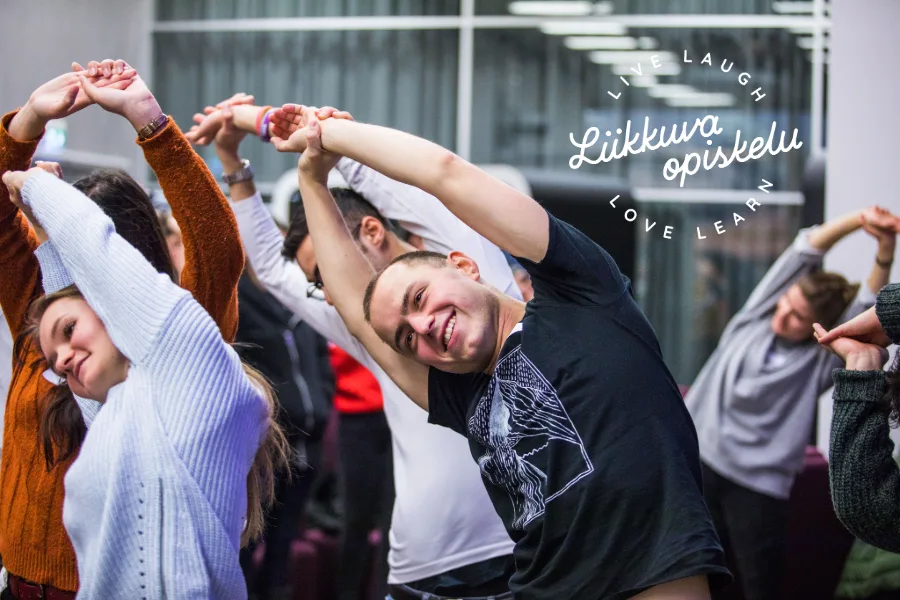
The results show that breaking up prolonged sitting during teaching situations has increased by approximately 5% compared to the spring 2025 survey. Many teachers include breaks in their teaching and encourage students to walk around or stretch during them. Some teachers also actively “get students moving” during breaks, for example by leading stretching or light exercise themselves.
The use of functional and movement-enhancing teaching methods has also slightly increased. Examples include working while standing, such as group or pair discussions done standing or while moving, moving between workstations or groups, and activating students to stand up and move during sessions—such as having students fetch materials from the teacher’s desk or write on the board themselves.
Teaching is also organized outdoors or in spaces outside the lecture hall, where movement occurs naturally.
Respondents’ perception of having sufficient skills has slightly decreased compared to earlier results, but nearly 35% still feel they have fairly or very strong competence (a decrease of 4.2%). The willingness to develop their own skills remained high (49.5%), although it had decreased slightly (a decrease of 2.7%).
About 93% of respondents consider it important to increase movement as part of teaching situations.
More information and support are needed
Respondents would like ideas and concrete practical examples. A resource bank of tips and self-study materials for independently exploring the topic, as well as peer support and sharing of examples and ideas among teachers, were highlighted. Respondents also expressed a need for pedagogical solutions that support movement. Workshops and webinars on the topic are also of interest, and there is a desire for equipment in teaching spaces that facilitates movement.
The biggest challenges in increasing physical activity in teaching situations are perceived to be overly cramped and impractical teaching spaces, as well as furniture arrangements that leave little room for movement or make it difficult. The prevailing culture of sitting is also seen as slowing down efforts to increase movement. For some respondents, “getting students to move” does not feel naturally aligned with the teacher’s role, and some find it difficult to motivate students to move during breaks or as part of teaching.