


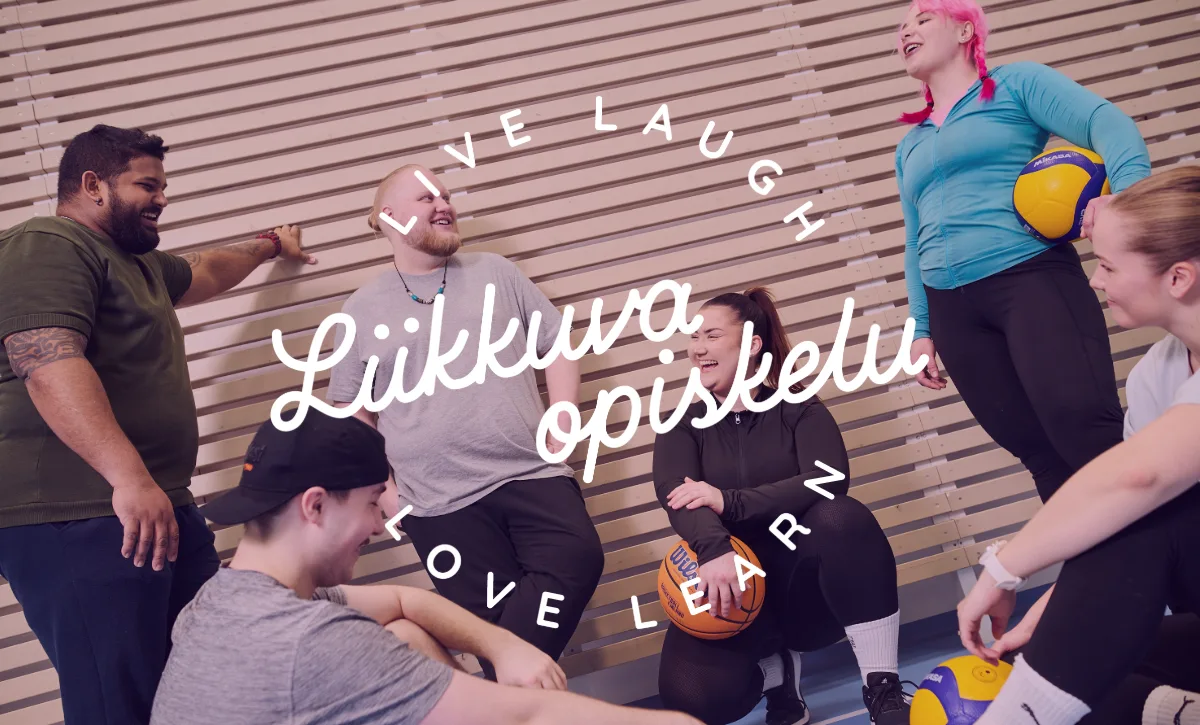
Movement Exists – but Unevenly
Active commuting is more common among Tampere University students than among TAMK students. Taking breaks from sitting is also slightly more frequent among university students. The most pronounced difference between the institutions, however, appears in functional teaching methods, which are clearly more common at TAMK.
Through the project, teaching staff have been trained to use functional teaching methods, and awareness has been increased. This is gradually starting to show.
Project Coordinator Anna Karppinen
Small Everyday Factors Motivate Students the Most
Students are particularly encouraged to be active by:
- gym services and the easy availability and borrowing of various sports equipment
- the possibility for self-directed movement during breaks
- refreshment and relaxation during the study day
In the open-ended responses, students emphasized practical wishes related to physical activity: longer breaks, more versatile facilities, table tennis tables, better weather conditions, and the possibility to listen to lecture materials while moving.
Each campus has different activation points, the aim of which is to encourage independent movement and reduce sedentary time.
Project Coordinator Anna Karppinen
Lack of Time and Facilities Slow Down a More Active Study Day
The biggest barriers to physical activity remain lack of time and the preference of many students to exercise in their free time. Students also feel that they are not aware of all the physical activity opportunities available on campuses. In addition, students wish for study spaces that allow changes in working posture. Distance and blended-learning students often feel left outside campus services, as they do not spend time on campus.
Study days are long, teaching spaces are cramped, and hybrid learning is common. All of these create challenges for reducing sedentary time, but that is precisely why this work is being done.
Project Coordinator Anna Karppinen
Progress Is Being Made – but Gradually
Compared to the 2024 survey, progress has been positive but slow. Active movement and breaking up sitting have increased slightly at both institutions. At TAMK, functional teaching has increased significantly, indicating successful development measures. At the university, the change has been more cautious.
Motivating factors and barriers have largely remained the same, but uncertainty about available physical activity opportunities has decreased slightly. In contrast, campus structural solutions and the increasing prevalence of distance learning have become more prominent issues.
Students clearly recognize the importance of physical activity for their well-being and want more functional opportunities within everyday studying. Steps in the right direction have already been taken, but developing campus spaces, time management, and the inclusion of distance-learning students still requires long-term, sustained effort.
Project Coordinator Anna Karppinen
The Students on the move project is a joint initiative of TAMK and Tampere University, also funded by the Ministry of Education and Culture. The project has been granted additional funding for the period 1 August 2025–31 July 2026. Through the project, study and workdays are made more active, proven good practices are tested and embedded into the everyday life of the Tampere Universities, and a comprehensive change in organizational culture is pursued.
Further information:
Project Coordinator
Anna Karppinen
anna.karppinen@tuni.fi